
NOTICE OF COPYRIGHT
This work is protected by the copyright laws of the United States of America. No portion of this material may be reproduced without the written permission of the copyright holder.
Permission is hereby granted by the owner for quotations to be taken from this work for the purpose of review or education under the following limitations.
1. No quotation shall exceed two hundred words in length.
2. Cumulative quotations used in any one work shall not exceed two thousand words.
3. All other uses must receive special written permission from the copyright holder.
Copyright: 1989 by Robert W. White
Robert W. White – Publisher
110 Miller Road
Stockbridge, GA 30281
TABLE OF CONTENTS
Dedication
Notice of First Edition
Introduction
a. Definition of Terms
b. How Does Science Work?
c. Aims and Attitudes of Science
d. Evolution and Creation and the “Scientific Method”
I. Is Evolution a “Fact” of Science
a. Claims of Past and Present Evolutionists Which Assert that Evolution is a Fact of Science
b. Statements of Scientists who Disagree
c. Evolution is not a Fact of Science
II. The Alleged Proofs of Evolution Explained
a. Abiogenesis
b. Natural Selection Based on Geographic Distribution
c. Acquired Characteristics
d, Vestigial Organs and Actions
e. Taxonomy
f. Comparative Embryology
g. Comparative Anatomy
h. Comparative Physiology
i. Paleontology
j. Time
k. Mutations
l. Dinosaurs
III. The Alleged Proofs of Evolution Refuted
a. Abiogenesis
b. Natural Selection Based on Geographic Distribution
c. Acquired Characteristics
d. Vestigial Organs and Actions
Illustration
Illustration
e. Taxonomy
Illustration
f. Comparative Embryology
g. Comparative Anatomy
h. Comparative Physiology
i. Paleontology
Illustration
j. Time
Illustration
k. Mutations
l. Dinosaurs
Illustration
Illustration
Explanatory notes on Illustration
–Geological Chart—
IIII. Could You Please Answer Me This
Conclusion
Footnote Page
Suggested Readings
DEDICATION
This book is dedicated to a collection of people. It is dedicated to my parents who gave me my life, my wife, Karen, who shared it, and my children, Vallarie, Becky, Maggie, Joy, Marty, Joe, and Jon who filled it to overflowing with joy and love.
This book is especially dedicated to my God, His son Jesus, and His friend the Holy Spirit for it is through their tireless efforts that I have eternal life.
NOTICE OF FIRST EDITION
This is a copy of the first edition of this volume. It has been produced initially in a run of six hundred volumes. It is my sincere hope that this book will be valuable in the defense of the truth of creation and of the God of the Bible to those who have opportunity to study from its pages.
INTRODUCTION:
In recent times, evolution has become theology of the secular humanist. He has preached his doctrine long and hard and many in the world have been convinced that evolution should no longer be questioned. Creationists who have hung tenaciously to the Genesis account of creation have been mocked, ridiculed, and shunned by the more “enlightened” class of theologian.
This situation has brought about many conflicts between the creationists and the evolutionists and, until recently, the creationists have lost most of the head-on confrontations.
This situation has caused many Christians to compromise their position, believing that evolution has been proven and should not be doubted. In this century, this has been reflected in the writings of such men as C. S. Lewis when he states,
“In the last chapter I compared Christ’s work of making new men to the process of turning a horse into a winged creature. I used that extreme example in order to emphasize the point that it is not mere improvement but transformation. The nearest parallel to it in the world of nature is to be found in the remarkable transformations we can make in insects by applying certain rays to them. Some people think this is how Evolution worked. The alterations in creatures on which it all depends may have been produced by rays coming from outer space. (Of course once the alterations are there, what they call ‘Natural Selection’ gets to work on them: i.e. the useful alterations survive and the other ones get weeded out.)”1
In his book, Lewis uses the theme of evolution to discuss what man can become spiritually. He accepts evolution and uses it as if there was no longer any question as to its authenticity.
One reason for this reaction is the proliferation of evolution doctrine in every walk of life. It is taught to us subliminally even from the earliest exposure we have to non scientific texts. Consider this quotation from Gulliver’s Travels.
“The question to be debated was whether the Yahoos should be exterminated from the face of the earth. One of the members for the affirmative offered several arguments of great strength and weight; alleging, that, as the Yahoos were the most filthy, noisome, and deformed animal which nature ever produced, so they were the most restive and indocible, mischievous and malicious: they would privately suck the teats of the Houyhnhnms cows; kill and devour their cats, trample down their oats and grass, if they were not continuously watched; and commit a thousand other extravagancies. He took notice of a general tradition, that Yahoos had not been always in their country: but, that many ages ago, two of these brutes appeared together upon a mountain; whether produced by the heat of the sun upon corrupted mud and slime, or from the ooze and froth of the sea, was never known.”2
Even many of the theistic philosophers over the centuries have compromised on the issue of evolution. Some have aided in turning their own generations from God to “science” because of their own surrender. One such writer is the seventeenth century writer John Locke. Consider the following quotation.
“Nor let anyone say, that the power of propagation in animals by the mixture of make and female, and in plants by seeds, keeps the supposed real species distinct and entire. For, granting this to be true, it would help us in the distinction of the species of things no further than the tribes of animals and vegetables. What must we do for the rest? But in those too it is not sufficient; for if history lie not, women have conceived by drills; and what real species, by that measure, such a production will be in nature will be a new question: and we have reason to think this is not impossible, since mules and jumarts, the one from the mixture of a bull and a mare, are so frequent in the world. I once saw a creature that was the issue of a cat and a rat, and had the plain marks of both about it; wherein neither sort alone, but to have jumbled them both together.”3
It is tragic that Locke and others willingly surrender to the pseudo intellectual theories of evolution and even create fables of their own in order to be “in” with the “intellectuals” of their time. Such a practice has devastated both theism and science. This blind acceptance of evolution on the one hand and abandonment of theism on the other is unhealthy and undesirable.
But in recent years there has been a great resurgence and proliferation occurring in our society concerning the creation/evolution controversy. Where the creationists have been mostly silent they now speak loudly; Where the creationists have been mostly illiterate they are now highly educated; Where the creationists have been the ones to fall in battle they are now becoming the constant victors.
This discussion is meant to accomplish several goals. It will, through research, (1) demonstrate the bias of many evolutionary scientists, (2) present the evidences and arguments they use to defend their theories, (3) demonstrate the weaknesses of these arguments and offer a refutation to them, and (4) demonstrate the validity of the creation position of origins.
A. Definition of Terms
Anyone who is skilled at the art of argumentation sets forth early the meanings of the terms which might be unfamiliar, vague, or confusing. There are several terms which shall now be defined to aid in the clarity of this discussion. Others will be found throughout the text of the dissertation as the need arises.
EVOLUTION: The theory of origins which holds that everything which exists came into being simply by naturalistic, non-directed chance. It holds that inorganic gave rise to organic, non-life gave rise to life, simple gave rise to complex, amoral gave rise to moral, mindless gave rise to mindful, and, when carried to its ultimate conclusion, atheistic gave rise to theistic.
CREATION: The theory of origins which holds that everything which exists came into being simply by God speaking it into existence. Creation theory holds that God is the only Existent which is eternal.
THEISTIC EVOLUTION: The theory of origins which vainly attempts to blend evolution theory with creation theory in an attempt to justify or resolve the contradictions and conflicts between the two theories of origins. Theistic evolution holds to the pronouncements of evolution theory of the simple giving rise to the complex, the ancient age of the earth, and other such concepts while saying simply that this was the method employed by God in His creating and that He was in the control of its direction throughout the vast ages of the earth.
OPERATION SCIENCE: The system of scientific inquiry that deals with the function of the universe and all of its various parts. Information is gathered by observation and experimentation, then inductive and deductive reasoning are applied, results and observations compared, and conclusions drawn. This is the method of gaining knowledge which was given to us by Plato in The Organon and which we call the “scientific method” of inquiry.
ORIGIN SCIENCE: The system of scientific inquiry that deals with the questions of where the universe came from as well as its various parts. Methods of experimentation and observation are inapplicable to origin science due to its nature. But inductive and deductive reasoning do very much apply to origin science and conclusions may be drawn with validity based on the establishment of a prima facie type series of arguments.
B. How Does Science Work?
Science, as has been alluded to in the definitions, functions through and by observation and experimentation. The classic example is the recognition of gravity.
The story goes that Sir Isaac Newton was sitting under an apple tree when one of its fruits fell, striking Sir Isaac on the head. He then began a series of experiments with falling apples and other objects and discovered gravity.
This story, told often to children as fact, is probably in reality fancy. But it does demonstrate the concepts in science of observation and experimentation. One observes an event in nature and that event inspires in him a desire to understand why that particular event transpired. His desire leads him to probe into science through experimentation to locate the cause. This procedure is labeled the “scientific method” and is used effectively in all areas of scientific experimentation.
This method of fact gathering has been of assistance even to gigantic proportions in the realm of human experience and existence. From this process of observation and experimentation comes transportation, electricity and its usage, plumbing, and even heating and air conditioning. From this time of approach to scientific progress comes health care advances and even methods of improving the ease and efficiency of various methods of improving the ease and efficiency of various methods of work. One should never minimize the great achievements made by science in using this method.
But any method of investigation, experimentation, reasoning, and such, when applied carelessly or unfairly to those things with which it cannot have a legitimate relationship, causes a violation of reason which brings about false premises, conclusions, and practices which can be, and often are, of monumental consequences.
The recognition of this fact will cause the unbiased and legitimate scientist to realize that the rules of operation science can never be applied legitimately to origin science. Due to the nature of origin science it is non-observable and non-reproducible. The practice of the “scientific method” in operation science have no valid relationship to those things dealing with origins.
C. Aims and Attitudes of Science
The aims and attitudes of true science are set forth briefly in the following:
a. Science aims at discovering facts about nature.
b. Science aims at applying those facts to the betterment of man and his situation.
c. Science aims at finding out “how” things occur and not “why” they occur.
d. One attitude of science is impartiality. It seeks to learn and understand what is rather than to justify what is believed.
e. Another attitude of science is open-mindedness. Science never rejects what it finds simply because it found something it was not looking for or something that it did not want to find.
f. The attitude of science is that of an observer rather than a manipulator. Science may use what it learns about nature but in a real sense it cannot control it except within certain narrow bounds allowed by the rules of nature.
It must always be remembered that a difference exists between the aims and attitudes of science and the aims and attitudes of pseudoscience. This lack of recognition in the scientific community has caused so much unneeded confusion in the creation/evolution controversy and has caused many to label creationists as ignorant or anti-scientific because of their opposition to the theory of evolution. But the evolutionist often violates the legitimate aims and attitudes of science and causes this false concept of the creationist to exist. This is unhealthy and undesirable in the realm of scientific study or in the philosophy of seeking all truth which is available to mankind. It gives a biased and improper concept of origin science and corrupts the learning experience of the student seeking the facts concerning the creation/evolution controversy.
D. Evolution and Creation and the “Scientific Method”
It should be remembered that the creation/evolution controversy deals with origin science and not operation science. Creation and evolution are models used to interpret the facts of science gathered by the “scientific method” rather than provide additional facts of their own. Properly then, creation and evolution are in reality philosophies promulgating world views of origins. They are models which are used to better understand and organize the facts of science into their most likely pattern of truth. They are models with premises which must be weighed against the facts discovered by the “scientific method” in order to see which model best fits the true scientific data as we know it. This puts both creation and evolution outside the realm of the “scientific method” and makes the application of the “scientific method” illegitimate and confusing. While they are models used to review the facts gathered by the “scientific method” of inquiry, they cannot themselves be studied by this method. They are models of interpretation and are not subject, in the strictest sense, to scientific investigation.
It must be remembered that this does not remove the legitimacy of either creation or evolution in the area of scientific inquiry. It merely defines their respective roles in science. It must be pointed out and stressed that they are models of interpretation and must be judged valid or invalid based solely on their effectiveness in coordinating and applying what the “scientific method” has provided. The true scientist must guard against bias and accept the facts and their most logical interpretation whether or not he enjoys the conclusion.
I. IS EVOLUTION A “FACT” OF SCIENCE?
Anyone who is even vaguely familiar with the teaching of evolution in the public school systems of America is keenly aware that the theory of evolution is no longer being presented as a theory of science. It is, instead, being presented as an unquestionable fact. There is still, sometimes, the disclaimer presented at the beginning of the courses containing evolution that it is just a theory. But the word “theory” and, consequently, the concept of its being a theory, are quickly lost in the rhetoric of absoluteness surrounding the manner in which the “facts” of evolution are presented. When coupled with the elimination of the teaching of the alternate theory of origins called creation science, along with its supportive scientific evidences, evolution is presented as an absolute and unquestionable fact to which there is no alternative.
This section of this discussion will present evidence to demonstrate that this tragic situation does exist and will demonstrate also that evolution is not a fact and that the honest scientist, whatever his views, must admit that evolution is only a theory.
A. Claims of Past and Present Evolutionists Which Assert that Evolution is a Fact of Science
It is appalling that the theory of evolution is no longer being presented as a theory for consideration by the thinking mind but as a fact to be accepted without question. Many would argue that such is not the case (i.e. some would argue that evolution is presented only as a theory and not as an absolute fact) but consider the following quotations by prominent evolutionists.
“The first point to make about Darwin’s theory is that it is no longer a theory but a fact. No serious scientist would deny the fact that evolution has occurred just as he would not deny the fact that the earth goes around the sun.” 1
“It takes an overwhelming prejudice to refuse to accept the facts, and anyone who is exposed to the evidence supporting evolution must recognize it as an historical fact.”2
“Evolution of the animal and plant world is considered by all those entitled to judgment to be a fact for which no further proof is needed.” 3
“No serious biologist today doubts the fact of evolution . . . . . We do not need a listing of evidences to demonstrate the fact of evolution any more than we need to demonstrate the existence of mountain ranges.” 4
“It has for many years been well-established scientifically that all known forms of life, including man, have come into being by a lengthy process of evolution. There are no hypotheses, alternative to the principle of evolution with its “tree of life,” that any competent biologist of today takes seriously. Moreover, the principle is so important for an understanding of the world we live in and of ourselves that the public in general, including students taking biology in high school, should be made aware of it, and of the face that it is firmly established even as the rotundity of the earth is firmly established.”5
“Evolution as a historical fact was proved beyond reasonable doubt not later than in the closing decades of the 19th century. No one who takes the trouble to become familiar with the pertinent evidence has at present a valid reason to disbelieve that the living world, including man, is a product of evolutionary development.”6
These direct statements make the case for creation seem nonexistent and the creationists to be totally devoid of intelligence. One might conclude that the creationists are all brain-dead or hopelessly mentally deranged because they still hold to such “archaic” views. After all, these eminent scientists have stated absolutely that “only overwhelming prejudice would keep one from recognizing the historical fact of evolution” or “that no serious scientist would deny the fact of evolution.”
We are even told that “anyone with the right to an opinion believes in evolution” and that evolution has been proved to be a fact “like mountain ranges.” With this concept stated as unequivocal, it seems foolish that anyone would wish to question such a fact of science and open himself to ridicule of the highest order.
If this dogmatism were not enough, the evolutionist also has his ridicule of creation in other forms such as critical humor. Consider the following quotations.
“In the beginning was matter, which begat the ameba, which begat the worm, which begat the fish, which begat the amphibian, which begat the reptile, which begat the lower mammal, which begat the lemur, which begat the monkey, which begat the man, who imagined God. This is the genealogy of man.”7
But these are not the only adamant declarations of evolution. Often it is presented as dogmatically in what appear to be softer words. It is simply stated as a fact without any reference whatsoever to the creation/evolution controversy. This type of presentation is often even more dangerous than the straightforward attacks presented by the evolutionists because it intimates that the controversy has been forever settled and the creationists have been banished from the kingdom of origins altogether. Consider the following quotation demonstrating this situation.
“Evolution in the extended sense cab be defined as a directional and essentially irreversible process occurring in time, which in its course gives rise to an increase of variety and an increasingly high level of organization in its products. Our present knowledge indeed forces us to the view that the whole of reality is evolution—a single process of self transformation.”8
One might also consider the statement of George Gaylord Simpson, who, in writing about man wrote that man:
“. . . . stands alone in the universe, a unique product of a long, unconscious, impersonal, material process with unique understanding and potentialities. These he owes to no one but himself and it is to himself that he is responsible. He is not the creature of uncontrollable and undeterminable forces, but he is his own master. He can and must decide and manage his own destiny.”9
As early as 1944, Dr. W. W. Howells made the statement that “Evolution is a fact like digestion.” In 1990 Dr. Stephen Jay Gould stated that “evolution is a fact like apples falling out of trees.” Scores of other scientists such as those already cited can be brought forth to testify to the validity of these statements. It would seem from “so great a cloud of witnesses” that anyone who would still question the factual nature of evolution was, indeed, a person “not entitled to an opinion.”
B. Statements of Scientists Who Disagree
Having read all of this information from the pens of so many prominent scientists and evolutionists, one would almost buckle under the mere weight of their credentials. It seems insane to any longer question the factualness of evolution doctrine when such an array of qualified men are positively convinced that evolution cannot be questioned. It might, then, be interesting to find out how these eminent scientists respond to their colleagues when they make statements such as the following.
“As we know, there is a great divergence of opinion among biologists, not only about the cause of evolution but even about the actual process. This divergence exists because the evidence is unsatisfactory and does not permit any certain conclusion. It is therefore right and proper to draw attention of the non-scientific public to the disagreements about evolution. But some recent remarks of evolutionists sow that they think this is unreasonable. This situation, where men rally to the defense of a doctrine they are unable to define scientifically, much less demonstrate with scientific rigor, attempting to maintain its credit with the public by suppression of criticism and the elimination of difficulties, is abnormal and undesirable in science.”10
“The more one studies paleontology, the more certain one becomes that evolution is based on faith alone; exactly the same sort of faith which is necessary to have when one encounters the great mysteries of religion. . .”11
“Evolution is unproved and unprovable.”12
As if this sampling of quotations were not enough, consider the several quotations of Dr. G. A. Kerkut from his volume, Implications of Evolution where, among a myriad of other observations which are devastating to evolution, he makes these statements.
“It is therefore a matter of faith on the part of the biologist that biogenesis (spontaneous generation) did occur and he can choose whatever method of biogenesis happens to suit him personally. . .”
“We can, if we like, believe that one or other of the various theories is the more correct, but we have no real evidence. . .”
“Though it is useful to consider that the relationships determined by comparative anatomy and embryology give proof of a monophyletic origin of the major phyla, this can only be done by leaving out much of the available information. . .”
“In effect, much of the evolution of the major groups of animals has to be taken on trust. . .”
“Of course one can say that the small observable changes in modern species may be the sort of thing that led to all the major changes, but what right have we to make such an extrapolation?”
“It is premature, not to say arrogant, on our part if we make any dogmatic assertion as to the mode of evolution of the major branches of the animal kingdom. . .”13
It is evident from this large collection of quotations gleaned from the work of Dr. Kerkut that he does not agree with his contemporaries when they state dogmatically, absolutely, and with finality that evolution is an unquestionable fact of science.
But there is yet another prominent evolutionist (or at least he was) who can be called to testify in this controversy. He is not, strictly speaking, an evolutionist any longer. However, he does not consider himself a creationist either. He terms himself a non-evolutionist. His name is Colin Patterson.
On November 5, 1981 Dr. Patterson delivered an address to a gathering of other prominent evolutionists and men of science at the American Museum of Natural History in New York. In that address he made the following statement.
“One morning I woke up and something had happened in the night, and it struck me that I had been working on this stuff for twenty years and there was not one thing I knew about it. That’s quite a shock to learn that one can be misled so long. Either there was something wrong with me, or there was something wrong with evolution.”14
Dr. Patterson went on to relate how he had begun asking his colleagues if there was one single thing they knew to be true of evolution. There was never any definitive response from his colleagues to this question. This being so, it becomes hard to consider as honest the statements made by those evolutionists who stated the question of the creation/evolution controversy has been forever settled.
But consider further the testimony of Sir Fred Hoyle, a distinguished astronomer from Britain. In 1981 the following quotations by him were published.
“I don’t know how long it is going to be before astronomers generally recognize that the combinational arrangement of not even one among the many thousands of biopolymers on which life depends could have been arrived at by natural processes here on the earth. Astronomers will have a little difficulty in understanding this because they will be assured by biologists that it is not so, the biologists having been assured in their turn by others that it is not so. The ‘others’ are a group of persons who believe, quite openly, in mathematical miracles. They advocate the belief that tucked away in nature, outside of normal physics, there is a law which performs miracles (provided the miracles are in the aid of biology). This curious situation sits oddly on a profession that for long has been dedicated to coming up with logical explanations of biblical miracles. . . It is quite otherwise, however, with the modern miracle workers, who are always found living in the twilight fringes of thermodynamics.”15
“At all events, anyone with even a nodding acquaintance with the Rubik cube will concede the near impossibility of a solution being obtained by a blind person moving the cubic faces at random. Now imagine1050 blind persons each with a scrambled Rubik cube, and try to conceive of the chance of them all simultaneously arriving at the solved form. You then have the chance of arriving by random shuffling at just one of the many biopolymers of which life depends. The notion that not only biopolymers but the operating programme of a living cell could be arrived at by chance is a primordial organic soup here on Earth is evidently nonsense of a high order.”16
Finally, this chapter will briefly view the words of H. S. Lipson, a British physicist, as he makes the following statements.
“. . . . evolution became in a sense a scientific religion; almost all scientists have accepted it and many are prepared to “bend” their observations to fit with it.”
“. . . . to my mind, the theory does not stand at all.”
“I think, however, that we must go further than this and admit that the only acceptable explanation is creation.”
“I know that this is anathema to physicists, as indeed it is to me, but we must not reject a theory that we do not like if the experimental evidence supports it.”17
Much more could be provided in refutation by fellow evolutionists to the quotations of those who would assert that evolution is proven beyond any doubt. But these serve to demonstrate conclusively that no such fact exists and that there are many renowned evolutionists willing to stand up and admit honestly that evolution is still just a theory.
C. Evolution is Not a Fact of Science
Having read all the information provided in this chapter, one can see that evolution is not prove and that many evolutionists believe that such proof can never be found. Evolution is only a theory and will never be anything more. The creationist can oppose all the tenants of evolutionary theory without opposing one fact of science. Rejection of evolution is not rejection of science. As one evolutionist stated, evolution is only a “tangled mish-mash of guessing games and figure jangling. . .”18 It is certainly not a “fact” of science.
II. THE ALLEGED PROOFS OF EVOLUTION EXPLAINED
This section of our study is designed mainly to present the “proofs” which the evolutionists use to support their postulation of organic evolution. Included in this section will be an explanation of those “proofs” so that they will be abundantly clear to the reader. These arguments will include postulates from both the area of origins and the area of mechanisms of operation. They will be presented as objectively as possible, as clearly and concisely as this author knows how, and answered in the next section of the paper. In so doing, the reader of this paper can get a better and clearer overall picture of the position of the evolutionists and of the extreme weaknesses of this world view of origins.
A. Abiogenesis
The concept of abiogenesis is the starting point for all evolutionary scientists and their theories. Abiogenesis simply means that life arose from non-life spontaneously. In other words, abiogenesis is the theory that inorganic gave rise to organic without the intervening of the and of some omnipotent being. It is the belief that life arose with only the aid of natural forces at work in the universe. It, spontaneous generation as it is generally called, had as its creator blind chance and nothing else. All true evolutionary schemes begin at this point.
Dr. G. A. Kerkut, in his book Implications of Evolution, listed seven unverifiable assumptions that are present (though generally neither mentioned nor discussed in great detail) in the general theory of evolution. They are as follows.
“(1) The first assumption is that non-living things gave rise to living material, i.e., spontaneous generation occurred.
(2) The second assumption is that spontaneous generation occurred only once.
(3) The third assumption is that viruses, bacteria, plants, and animals are all interrelated.
(4) The fourth assumption is that the protozoa gave rise to the metazoan.
(5) The fifth assumption is that the various invertebrate phyla are interrelated.
(6) The sixth assumption is that the invertebrates gave rise to the vertebrates.
(7) The seventh assumption is that within the vertebrates the fish gave rise to the amphibian, the amphibian to the reptiles, the reptiles to the birds and mammals. Sometimes this is expressed in other words i.e., that the modern amphibian and reptiles have a common ancestral stock, and so on.
For the initial purposes of this discussion on evolution I shall consider that the supporters of the theory of evolution hold that all these seven assumptions are valid, and that these assumptions form the General Theory of Evolution.”1
One can clearly see from this quotation that Dr. Kerkut states emphatically that abiogenesis (spontaneous generation) is an assumption inherent in all theories of evolution. The fact is that there is no other possible starting point except spontaneous generation for the evolutionist. He simply has no other recourse!
One should take note also that the evolutionist is forced into the position that spontaneous generation not only occurred by that it occurred once and once only. This is a telling admission and will be discussed in detail later.
B. Natural Selection Based on Geographic Distribution
The concept of natural selection was not original with Charles Darwin. Several individuals before Darwin had held to this mechanism as the force behind organic evolution. But it was Charles Darwin that made this theory both prominent and popular in the scientific world. Darwin contended that natural selection, called ‘the survival of the fittest’ by many, was the process by which nature culled out the less desirable species and moved upward by selecting the best that was available and discarding the remainder. The biology textbooks that still present this as a viable argument to support evolutionary theory generally use the example of the moths – light and dark – whose interbalance was changed by industrial pollution.
One particular biology text gives the following summary of Darwin’s position.
“Some of the salient points of Darwin’s theory of evolution might be summarized as follows: (1) Organisms of the same species are not alike but vary slightly among themselves, and the offspring of a particular pair of parents tend to vary around the average of these parents. (2) More offspring are produced than can possibly survive. (3) In order to survive, these offspring must compete with each other for existence. (4) As a result of this competition, those individuals best adapted to that environment tend to survive (survival of the fittest). (5) New species originate, over a period of many generations, by this natural selection of the best fitted individuals. According to Darwin, when ever two groups of a plant or animal population are each faced with slightly different environmental conditions, they would tend to diverge from each other and in time would become sufficiently different from each other to form separate species. In a similar manner greater divergences arise at later times.”2
C. Acquired Characteristics
The general concept of acquired characteristics is that the descendant inherits from the parent or parents certain characteristics developed during his/their lifespan on the earth. If the adult became stronger and then gave birth to offspring, this argument contended that this strength would be passed on to that new generation and to all future generations.
Several general arguments have been given over the years to support this contention. Two of those arguments will be listed and explained here so that the reader will better understand the basis for this argument.
The first example often used that will be mentioned here is the neck of the giraffe. According to the theory of acquired characteristics, the neck of the giraffe was at one time much shorter. It is contended that there was a shortage of food for the giraffe due to a drought and a loss of vegetation and that the giraffe had to stretch higher and higher for the tender leaves of the trees in order to secure food supplies ample enough for the species to survive. This stretching made very small, almost unnoticeable changes in the length of the neck of the giraffe over each generation. But, over vast periods of time, these small stretchings of each generation were passed on from parent to offspring until the modern day giraffe had lengthened his neck to the proportions it now enjoys.
The other example often given is that of the eye. The eye did not, according to evolutionary theory, happen overnight. It occurred, rather, over many generations through acquired characteristics. The process was supposedly as follows. The (whatever it was, perhaps a trilobite) caused a light sensitive patch to form on the skin. This light sensitive patch was inherited by the offspring. This patch continued, through more exposure to sunlight, to increase in sensitivity from generation to generation. Finally, over millions and millions of years, an eye appeared where the light sensitive patch had before been found.
D. Vestigial Organs and Actions
The argument based on vestigial organs is that the human body had organs which once had a function but do so no longer. These organs are supposedly the remnants or vestiges of eons of evolutionary change and have not yet been completely eliminated from the human physiology by this evolutionary process. These vestigial organs are, in fact, remains of the past still existing but not functioning in the present. Among the list of vestigial organs one generally finds the ear muscles, body hair, and the ever popular appendix.
The argument based on vestigial actions is similar and the two are generally linked together actions are exampled by the hair movements when one becomes cold, the movement of the ears, and other such actions.
E. Taxonomy
Taxonomy is merely the classification system used by scientists to group animals into phyla, orders, classes, etc. It is argued that evolution must be true or it would not be possible to have such a classification system. This system is used to show which animals descended from which other animals and how life, universally, is interrelated. It is in relation to this classification system that many of the comparative arguments are allegedly supported.
F. Comparative Embryology
Comparative embryology forms its arguments in and around two distinct concepts. The first is the similarity of the different embryos in structure to each other from different animals as they develop (ex: the fish, the bird, the pig, and man). It is argued that the similarities in the forms of the unborn from zygote to birth indicate that there is a universal “grandfather” for all of these life forms. They are claimed by the evolutionary hypothesis to have a common ancestor.
The second embryologic argument is usually called the recapitulation theory, or, scientifically stated, ontogeny recapitulation phylogeny. The concept is that the embryo in its singular self (ontogeny) retraces (recapitulation) the development of the entire ancestral history (phylogeny) of the race of creature to which it belongs. It was once believed that by studying the embryo of the human it would be possible to forever settle the exact order in which the human race developed.
Darwin felt that this was the primary proof of evolution and his position was greatly supported by Dr. Earnst Haeckel, himself a prominent scientist and evolutionist.3 Dr. Haeckel did much to promote this concept and is still often quoted in relation to this argument for evolution.
One point usually stressed in this argument is that the embryo has present in one stage of its development, the gill slits once used by its ancestors millions of years earlier when those ancestors were in their fish stage of the evolutionary process. There is also allegedly a semblance of a tail at one stage of the embryonic development.
G. Comparative Anatomy
This argument is similar to the one previously offered. It merely makes comparisons between structures of different animals and argues from the similarities of structure that these animals must have had a common ancestor. Consider this quotation from Charles Darwin.
“The homological construction of the whole frame in the members of the same class is intelligible, if we admit their descent from a common progenitor, together with their subsequent adaptation to diversified conditions. On any other view, man or monkey, the foot of a horse, the flipper of a seal, the wing of a bat, &c., is utterly inexplicable.”4
H. Comparative Physiology
This argument is similar to the two previously offered arguments in that it merely offers as proof of the evolution hypothesis the fact that different animals have organs, chemicals, etc., that function similarly to each other and that this indicates common ancestry.
I. Paleontology
These are the arguments which are based on the fossil record. Some of the following are the stronger arguments offered.
1. Fossils seem to lie in a general ascending order from simple to complex in the fossil beds.
2. Evolution has been “demonstrated” by such family collections as the horse. Fossils have been found that allegedly give almost complete evolutionary history of the horse from its appearance to the present day horse.
3. “Missing links” have been found in the fossil record which indicates changes from such large classifications as reptiles to birds. The most highly acclaimed “transitional form” to date is Archaeopteryx. This form seems to be a bird (wings, feathers, etc.) and a reptile (teeth, claws on wings, etc.). Evolutionists claim that this is perfect proof of evolution.
J. Time
One of the arguments used to support evolutionary theory is the ancient age of the earth. The argument is that given enough time, anything can and will happen. Consider the words of George Wald on the subject.
“Time is in face the hero of the plot. The time with which we have to deal is of the order of two billion years. What we regard as impossible on the basis of human experience is meaningless here. Given so much time, the ‘impossible’ becomes possible, the possible probable, and the probable virtually certain. One has only to wait; time itself performs the miracles.”5
K. Mutations
There are two theories concerning mutations (these are mechanism theories). The first theory states that evolution has as a mechanism many minute mutations occurring randomly from which, through natural selection, the good ones are randomly selected and the species advances up the evolutionary ladder.
The second mutation theory is based on systemic mutations where the organism is bombarded by mutations all at once and makes a great leap in the evolutionary ladder. This theory rejects small evolutionary changes and demands great ones in huge leaps. This theory has been referred to by evolutionists as the “hopeful monster” theory and is becoming more and more popular in contemporary times.
An example of systemic mutation would be a reptile laying on an egg from which a bird hatches and flies away.
L. Dinosaurs
Dinosaurs are mentioned here because for some reason unknown or unrecognized by this author, many people seem to think that dinosaurs are an example of and proof for evolutionary theory. The dinosaur, so we are told, died out 70 million years ago from some unknown reason and that their not existing today proves evolution to be a fact of science rather than a theory.
III. THE ALLEGED PROOFS OF EVOLITION REFUTED
Having now presented the major argumentation in the arsenal of the evolutionists, it will be the purpose of this paper to review these arguments in light of present scientific knowledge to determine whether or not these arguments are viable. Counter arguments will be presented from available sources to determine whether these evolutionary arguments contain fallacies of such a magnitude so as to invalidate the evolutionary hypothesis.
The greater portion of material in this section will present arguments in three specific areas. The first area will be material surrounding the concept of biogenesis or, by its more popular name, spontaneous generation. The reason for this area receiving great emphasis and examination is because to have evolution one must first get it underway, i.e. to have a starting place. If the concept of spontaneous generation is shown not to be in the least bit viable then evolution as an interpretive model of origin fails.
The second area which will receive great attention is that of the fossil record. As Dr. LeGros Clark put it,
“That evolution did actually occur can only be scientifically established by the discovery of the fossilized remains of representative samples of those intermediate types which have been postulated on the basis of indirect evidence. In other words, the really crucial evidence for evolution must be provided by the paleontologist whose business it is to study the evidence of the fossil record.”1
Nearly all of the other “proofs” of evolution are merely correlative and not causal. They really prove little if anything at all. As an example of the differences between causal and correlative relationships the following might be offered. There is an indirect relationship between the consumption of ice cream in the city of New York and the death rate in the country of Kenya. When one increases, so does the other. But this certainly does not establish that the one causes the other. There is a correlation between the two events, but there exists no causal relationship between them. Actually they are both most likely caused by the increased heat of the summer months and the increased coolness of the winter months. But there is a pattern which, on the surface, demonstrates some type of relationship.
This type of evidence, correlative rather than causal, is generally the type of evidence used to defend evolutionary concepts. Often comparisons are made in anatomy, etc., which seem to indicate some relationship. But that relationship is never shown to be any more than a correlative relationship, never a causal one. Any causal relationship offered is assumed, never demonstrated.
The third area which will receive much attention is the area of mutations. The reason for this is because for evolution to function or be considered viable, it must have a valid mechanism of operation. Mutations are presently the only real mechanism being offered by the largest portion of dedicated, serious evolutionists. If this mechanism is shown to be impossible then evolution is left without a mechanism. Evolution without a mechanism is likened to an automobile without an engine; it is just not going to go anywhere. If the mechanism of the evolutionists is taken away by the scientific facts, then evolution cannot be defended.
A. Abiogenesis
The concept of spontaneous generation has been around for many centuries. It is very probable that it had its roots in Greek mythology. Spontaneous generation was believed by Thales (624-548 B.C.), the Greek philosopher who is sometimes called the “father of philosophy.” He believed that everything that existed was composed of water. Rocks were simply water in another stage, and life forms were simply water in still another stage.2
Other philosophers followed after Thales who believed his theory of a primary element but differed with him as to what that element was. One philosopher believed that the element was earth, another believed it was wind, while still another believed it was fire. It is interesting to note that the four muses of Greek mythology were earth, wind, fire, and water. It would seem that the first concepts of spontaneous generation then were born from Greek mythology or were at least closely related to it.
This theory of spontaneous generation can be traced constantly all the way to the time of the Flemish physician Von Helmont (1577-1644) who taught that mice came from a combination of cheese, wheat, and sweat.
——————–
2It is interesting that Thales said, “In the beginning, water” and modern man laughs at him. But today some scientists are saying “In the beginning, hydrogen” and we have stopped laughing. One might wonder why man coming from water is mythology and man coming from hydrogen is science.
The first serious threat came to spontaneous generation from a man named Abbe’ Spallanzani (1729-1799) in his response to the experiments of Joseph Needham. Needham was convinced that through an experiment he conducted in 1749 he had conclusively demonstrated that spontaneous generation was, to borrow an evolutionary claim, a “fact like apples falling off of trees.”
Needham’s “proof” was from an experiment where he took several flasks filled with various materials and boiled them for several minutes. He afterwards set them aside for several days to see what would happen. In those few days there appeared in the various broths the signs of life and Needham announced that he had demonstrated spontaneous generation. He was not aware that the living organisms had come from cysts that the short boiling time had not destroyed and from the air to which the contents were exposed. His “scientific method” was extremely faulty in both the setting up of the experiment and the lack of constant vigil over the experiment. This led to the false assumptions that he made and the conclusions he drew.
Spallanzani reviewed the experiment of Needham and his procedures and pointed out that Needham’s results were invalid because of the incomplete sterilization accomplished in this experiment. He them conducted his own experiment and properly sterilized the contents of the flasks. After the sterilization was completed, Spallanzani sealed the necks of the flasks to the outside air by the means of a blast lamp. The broth in the several flasks remained sterile and Spallanzani had demonstrated that spontaneous generation was a false concept.
But Spallanzani was not to receive the credit due him without a fight. Believers in spontaneous generation generally held to the concept of vitalism. The theory of vitalism was the idea that within the air was “vital force” which brought about spontaneous generation. No one seemed to really understand what this force was supposed to be or how it was supposed to work, but they were sure that it did exist.
Spallanzani was accused of rigging the experiment by sealing off the neck of the flasks. It was argued that this prevented the “vital force” from entering the flasks and bringing about spontaneous generation. Although a foolish and false argument, Spallanzani was never able to convince his opponents of the validity of his experiment.
Shortly before this time, a man named Fransisco Redi (1621-1697) had also set about to test through experimentation the theory of spontaneous generation. He strongly doubted the belief that rotting meat gave rise to flies, a common belief of his time, and he devised an experiment to test this hypothesis. He took three glass containers and placed meat inside them. He sealed one of them with an air tight seal. He covered the second with a fine mesh so that air could enter, but nothing else. The third container he left totally open. Redi was a good scientist and watched his experiment carefully. Only a short time passed until a fly came and began to look for a place to deposit her eggs. He observed as she tried to enter the several jars, first with no success on those covered, and finally entered the one that was totally open. In a short time she had deposited her eggs and she left. In a few days there appeared maggots in the open jar but none appeared on the two that had been protected. The fact that only the meat accessible to the fly had maggots demonstrated that flies come from eggs and not from rotting meat. Spontaneous generation had been falsified.
The next great demonstration of the falsification of the theory of spontaneous generation was performed by Louis Pasteur (1822-1895). He performed the same basic experiment as Spallanzani but with several improvements. He first took several flasks and put the broth in them open as Needham had done. He then took several other flasks and sterilized them completely and sealed off the necks with a blast lamp as Spallanzani had done. He finally took several of the flasks and sterilized them completely and then bent the necks into the shape of an “s” but did not seal them off. His results from the reenactment of Needham’s and Spallanzani’s experiments were exactly the same as they had witnessed. But the flasks on which he had only bent the necks and not sealed them brought to an end the belief in “vitalism” and the prevailing belief in spontaneous generation. In those flasks there was no contamination of the various broths. The bacteria in the air could not reach the liquids because they would be trapped on the moist necks of the flasks.
Pasteur was and is given credit for proving that spontaneous generation was a false belief. At the time he presented his experiment he stated in a speech that spontaneous generation had been dealt a blow from which it would never recover. Yet today the very text books that record the fact that Pasteur proved spontaneous generation to be a false concept rely on spontaneous generation in the later chapters to get their evolutionary hypotheses underway.
It should be remembered at this point that Dr. G. A. Kerkut, in stating his seven implications of evolution, stated that the very first implication or assumption of evolution was the fact that spontaneous generation did occur. This theory which had been well disposed of by Pasteur has become the foundational cornerstone of evolutionary theory. It would be good here to notice what a few other writers have stated about the matter.
“To make an organism demands the right substance in the right proportions and in the right arrangement. We do not think that anything more is needed—but that is problem enough. One has only to contemplate the magnitude of this task to concede that the spontaneous generation of living organisms is impossible. Yet here we are—as a result, I believe, of spontaneous generation.”3
Impossible is the key word here. It is indeed a problem of great proportions. Consider the following.
“Eugene Guye estimated that the odds against the formation of a simple protein molecule by chance combinations of atoms of hydrogen, carbon, nitrogen, and sulfur are 100 multiplied by itself 160 times to 1; and the simplest organism, in order to live and reproduce itself, must be composed of at least 100 different kinds of protein molecules, which must have originated simultaneously at the same spot!”4
In other words, just formation of a simple protein molecule by chance is absolutely absurd. The chances are one in one followed by 320 zeros. But that alone does nothing for the evolutionist and his theory. This chance occurrence has to happen over 100 times in exactly the same location, at exactly the same time in that 4.5 billion evolutionary years that are supposed to have elapsed, producing 100 different and distinct protein molecules, which in turn must bump into each other and combine in just the right order, form an outer wall for protection, begin to function as a sub-living organism, evolve into a protozoa capable of reproduction, all the while surviving in a hostile environment while accomplishing this “miraculous” feat. This fairy tale is so absurd as to be insane. And all of this does not even take into consideration the necessity of food for this life form, digestion, excretion, etc., etc. If that were not enough, consider the following quotations.
“Even the simplest of these substances (proteins) represent extremely complex compounds, containing many thousands of atoms of carbon, hydrogen, oxygen, and nitrogen arranged in absolutely definite patterns, which are specific for each separate substance. To the student of protein structure the spontaneous formation of such an atomic arrangement in the protein molecule would seem as improbable as would the accidental origin of the text of Virgil’s ‘Aneid’ from scattered letter type.”5
“The probability of life originating from accident is comparable to the probability of the unabridged dictionary resulting from an explosion in a printing shop.”6
“The chance that higher life forms might have emerged in this way is comparable with the chances that a tornado sweeping through a junk yard might assemble a Boeing 747 from the materials therein.”7
It should be remembered that these quotations are not taken from some wild eyed, Bible banging fanatic. These quotations are all from leading evolutionists.
It should also be remembered just here that the foundational law of all biological sciences is that of biogenesis. This law states that all life comes from preceding life and that of its kind. There has never been a time when this law has been observed to be violated. This is fundamental. This is unquestioned—unquestioned, that is, until one comes to the discussion and study of evolution.
I should like to finish this section with a quotation from Dr. Bert Thompson on this exact point. Dr. Thompson states the following.
“The law of biogenesis states exactly that. Evolution, however, predicts exactly the opposite in two regards: first, evolution theory states that life originally came from non-life, and; second, evolutionary theory states that life has not reproduced life like itself, but rather has (millions of billions of times!) crossed phylogenetic barriers to produce all the different species, general, classes, families, and orders of plants and animals that we see today.”8
B. Natural Selection Based on Geographic Distribution
“Today, a century after publication of the Origin, Darwin’s great discovery of the universal principle of natural selection is firmly and finally established as the sole agency of major evolutionary change.”9
If one was to read this quotation and take it seriously, he might believe that a paper on the refutation of evolutionary evidences would of necessity spend a great deal of time on this subject. Perhaps several years ago that would be true. But in reality this quotation is completely inaccurate and natural selection IS NOT ANYTHING SOLEY!
It should first be stated that the creationist has no problem with the concept of “survival of the fittest” in its ultimate truth. After all, it only states the obvious, that those best suited to survive will survive because those that survive are the ones best suited to so do. This is quite simply a tautology and a very good one indeed! That is, it is simply a game of words using circular reasoning. Its like saying a red cat will be the color red. This statement is absolutely true but when it has been stated either eloquently or plainly you still must ask, “What have you got?”. The obvious answer, of course, is absolutely nothing.
The creationist also has no problem with changes that take place within species. He simply believes that God set certain boundaries for change and that the species can extend itself to those boundaries but not beyond. The creationist, however, does not believe in the types of changes across from one phyla to another that the evolutionist would claim take place. The creationist simply believes that natural selection is functioning by choosing something that has always been there, placed there in the beginning by the Creator.
If natural selection is the “sole” agency of evolution today as Huxley suggests, then it must be that it selects from only what has always been available. Any other conclusion would falsify Huxley’s statement. How then, one might ask, has all the many species that exist today come into being. Where is the creative force in natural selection to create any new and different organism?
With this situation firmly under consideration one must recognize that natural selection “solely” is the enemy of evolution. Natural selection is a process which narrows the biological world rather than expanding it. Thus, if Huxley is correct, natural selection is the process of anti-evolution rather than evolution.
But many evolutionists do not agree with Huxley and his statement. Consider the following quotations.
“No one has ever produced a species by mechanisms of natural selection. No one has ever gotten near it and most of the current argument in neo-Darwinism is about this question.”10
“Early in the present century there was a heated discussion as to whether evolution was the result of natural selection or of mutation. As more was learned about heredity, it became clear that natural selection can operate only when there is something to be selected, that is when mutations present alternate ways of coping with the environment. The evolution of new species, then, involves both mutation and natural selection.”11
So much for the “sole agency” concept of natural selection presented by Huxley. Natural selection can do nothing but narrow the field unless assisted by some other process, in this case mutations. When this paper later deals with and dismisses the mutation hypothesis it will be eliminating also natural selection from the weaponry of the evolutionist.
If this paper had been written some years ago it might have included information such as the fact that Darwin, towards the close of his life, became unsatisfied with natural selection as a mechanism. It might have included an array of quotations showing the general disappointment evolutionists have felt with this concept of mechanism. It might have even pushed harder the issue that natural selection is a narrowing process rather than a broadening one. But none of that is any longer necessary or important since the attachment of the theory of mutations.
There is one point this paper does wish here to stress. You cannot select something that is not there. Natural selection can only take from what is already available. It has no creative powers. The peppered moth of England which is so often used to support natural selection is invalid. Both moths, the light species and the dark species, existed together. Natural selection did not advance evolution. Natural selection worked in a manner totally harmonious and consistent with the concept of creation.
To the general concept herein outlined and to the example specifically given, L. Matthews penned these words.
“The experiments beautifully demonstrate natural selection—or survival of the fittest in action, but they do not show evolution in progress, for however the populations may alter in their content of light, intermediate, and dark forms, all the moths remain from beginning to end Biston betularia.”12
From the side of philosophy (since this is more a philosophical question than a scientific one) one might set forth these two questions. (1) If natural selection is survival of the fittest in a total sense as the evolutionist would imply, why is there more than one species on the earth? Since one species is ultimately the best adapted for survival (whichever one that might be) it would stand alone in the world of biology as the sole survivor of natural selection. (2) If natural selection brings about the survival of the fittest, why is it that so many of these “fittest” plants are designed in such a manner as to make their reproductive systems the most desirable for food to so much of the rest of the biological world? This would seem to make them less likely to be the fittest and, therefore, they should have not survived.
C. Acquired Characteristics
The theory of acquired characteristics was once an almost universal doctrine of evolutionists. Up into the 19th century this was true. But near the end of that century a man named August Weismann cut the tails off of twenty generations of mice without inflicting a change in the length of the tails of future generations. This was proof positive that acquired characteristics was just so much prestige jargon.
Until Weismann’s experiment it was generally believed that there were certain genes (although not called that) that were located throughout the body. Whenever breeding took place, these genes would rush to the reproductive organs and be passed on to the offspring. It was therefore believed that you passed on to your offspring what you actually were at the point of their conception.
Today it is known that any possible changes from generation to generation to aid evolution must come in mutational changes in the DNA order to be passed on. Acquired characteristics as a mechanism for evolution has been totally abandoned by those educated in biological fields.
It should, however, be mentioned here some points about the two examples given in the previous section which have been used to support this concept, that of the giraffe’s neck and that of the eye.
Concerning the neck of the giraffe, if stretching caused it to grow why is it that there are short necked giraffes? If stretching to reach food in a drought caused the neck to grow, why was this exclusive to giraffes? There are other animals in that region who also should have stretched their necks. If evolution was slow and the food shortage which made the giraffe stretch his neck was caused by a drought, then the drought must have lasted constantly for millions upon millions of years. That being the case, how did the other animals in that region (or even the giraffe, himself) even survive at all?
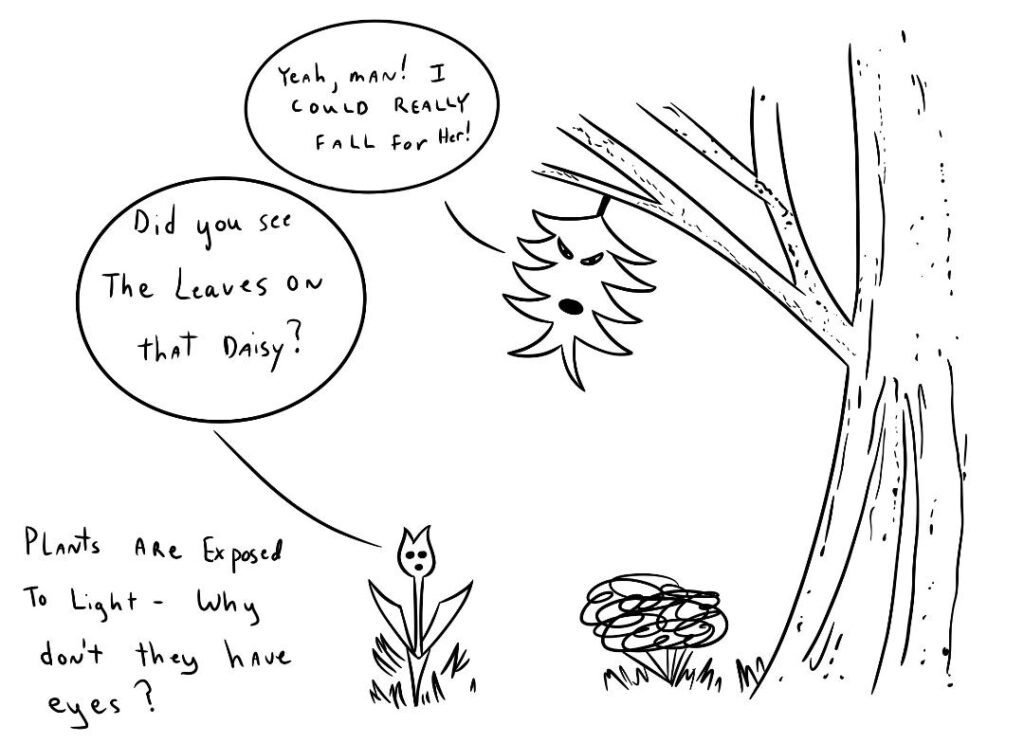
Concerning the eye, if it was caused by a light sensitive patch caused by the sun beating down on the animal kingdom, why are not all eyes on the top of the head rather than normally on the front? Why are they not on the backs of the quadrupeds? Why are there not many eyes on the larger animals rather than the general two that we find? Why did plants not develop light sensitive patches which would also become eyes?
These questions would have been unanswerable in the 19th century. I suppose now they are useful only for entertainment and the occasional evolutionist who still lives in the “Cro Magnon” times of reasoning.
D. Vestigial Organs and Actions
“Man has approximately one hundred vestigial structures that are also represented, and often useful, in lower types. Illustrations of vestigial structures in man include the following: (1) The vermiform appendix is a remnant of an organ that is useful in certain herbivorous animals and may have had a specific function in man generations ago. (2) The third eyelid in the inner angle of the human eye corresponds to the nictitating membrane, or lid, that moves laterally across the eye in such lower animals as the frog, bird, and dog. (3) Muscles of the external ears are useless for man but are used by lower animals to turn the ear in the proper direction to acquire the sound waves more accurately. (4) The terminal vertebrae (coccyx) are of no value to man, but they are the foundation for the external tail in lower animals. It is interesting to note that the early embryo of man possesses an external tail that is discarded before the advanced stages are reached.”13
This introduction to vestigial organs is used in a 1975 copyrighted biology book. Not only is it inaccurate, it was out of date before it was originally printed in that book some 35 years earlier. This type of careless and, sometimes dishonest text preparation is, it seems, the rule rather than the exception. It will be the purpose of this section of this paper to expose through quotations that this type of argument is not valid and there are no such things as vestigial organs.
In the pursuit of this aim, the alleged “vestigial organs” this text listed as well as those listed earlier in this paper will be reviewed and their uses set forth.
The very concept of vestigial organs is one that cannot be defended logically. Just because science has not discovered the function of a particular organ does not mean it has none. In fact, as will be seen, several of the organs that were once listed as vestigial are now known to be essential to human life.
a. Appendix
The organ that is most often listed as vestigial is the ever popular appendix. Notice in the following quotations not only what they say but when they said it.
“Practically all the so-called “vestigial organs,” especially those in man, have been proved in recent years to have definite uses and not be vestigial at all. At one time, evolutionists claimed there were about 180 such vestigial organs in man, but practically none are claimed now. Some of these were the thyroid gland, the thymus, the coccyx, the pineal gland, the ear muscles, the tonsils, and the appendix. All of these are now known to have useful, and often essential, functions.” (1974)14
“Is this truly a useless organ? Apparently the only men who so claim are those attempting to find support for evolution. Many men of the medical field are convinced that the appendix is indeed a useful organ. Some feel that it secretes fluids into the intestines for lubricating purposes. Some think it has an endocrine function. Others have suggested that it provides digestive juices. Some scientists feel that it manufactures white blood cells. It is very likely that the appendix may have a combination of these functions, which would make it a most useful organ.” (1970)15
“ . . . the significance of the vermiform appendix is still obscure, but in view of its rich blood supply it is almost certainly correct to regard it as a specialized and not a degenerative organ.” (1934)16
“There is no longer any justification for regarding the vermiform appendix as a vestigial structure.” (1947)17
“The human appendix, that tiny anatomical curiosity whose importance to health has long been doubted and debated, may all along have been protecting other organs of the body against the attacks of cancer. Evidence to support this startling view was presented at a California meeting by Howard R. Bierman, clinical professor of Medicine at Loma Linda University . . . As a theory, the human appendix may be an immunologic organ whose premature removal during its functioning period permits leukemia and other related forms of cancer to begin their development. The appendix is composed of lymphoid tissue, suggesting that like such other lymphoid organs as the tonsils and spleen it may secrete antibodies which protect the body against attacking viral agents.” (1966)18
“For example, some argue that because we have so many problems with the appendix, and it can usually be removed without harm to the individual, that it is therefore vestigial. But we know the organ is part of the reticulo-endothelial system of the body and, like the tonsils, fights infection.” (1976)19
It becomes quickly apparent that this organ, the appendix, is anything but vestigial. The evolutionist may want it that way but medical science has denied him this claim in relation to the appendix.
b. The Third Eyelid
The third eyelid is sometimes claimed to be vestigial but in reality it helps protect the eye and clean out dirt particles by moving them to the side of the eye where they can be easily removed or flushed out naturally by the natural flushing process of the eye.
c. The Ear Muscles
This author used to point out that he would pull his glasses back on his nose with his ears when they would slip down and that, therefore, his ear muscles were not vestigial, but performed a very important function. That argument was laid to rest when Dr. Bert Thompson stated (in humor, of course) that the ability to move the ears was a sign of retardation in humans.
In reality, the ear muscles do perform a function which is needed and are, therefore, not vestigial. Consider the following quotation.
“Although these structures do not serve the usual purpose of muscle tissue, namely that of contraction, they are nevertheless useful in providing facilities for increased blood supply to the organ (ear), thereby diminishing the danger of freezing, etc. Muscle is more than simply a contractile organ. It is actively concerned in metabolism. Without some musculature in its structure the nutrition of the outer ear might be seriously impaired.”20
It can be clearly seen from this quotation that the ear muscles perform a useful function and are not vestigial.
d. Coccyx
Some claim that this is just a remnant of a lost tail in the human. But is this true? Consider the following.
“Actually this is a part of the backbone column and is known to be the connecting point for several muscles. It is, therefore, not useless! It has also been shown that the coccyx provides support for muscles which control functions of eliminations. It also aids in sitting and gives support to internal organs when man is standing.”21
It is apparent that this “vestigial” organ is actually highly needed and functional in the human species.
e. Body Hair
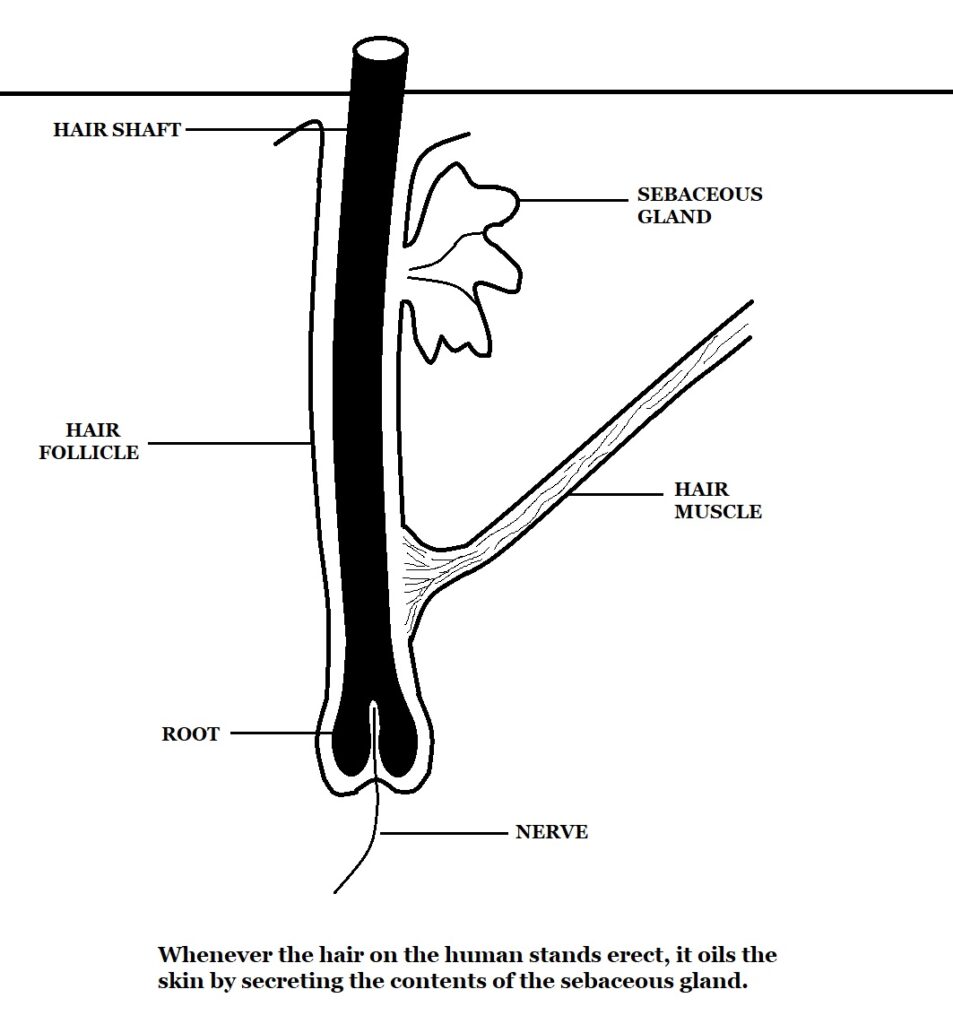
It is argued that the body hair on the human is the remains of what our ancestors had to keep them warm. It is further argued that when the hair follicles stand up and give us “goose bumps” we are performing a vestigial function that once would have kept us warm but no longer serves any function. But is this correct? Consider the following quotation.
“Each (hair) is embedded in a follicle into which opens the duct of at least one sebaceous gland secreting an oily fluid necessary to keep the skin in good condition. These hairs and the muscles attached to them – the arrectores pilorum – have a two fold function. The muscles which are stimulated on the side of the hair toward which it slopes, on contraction diminish the obliquity of the hair follicle and render the hair more erect, and, at the same time compress the sebaceous glands and expel their contents.”22
In other words, when your hair performs this function and you get “goose bumps” you are actually getting a “lube job” to protect you from the environmental forces that might otherwise damage your skin. From this wealth of information it is all too apparent that the argument for evolution based on vestigial organs is in no way substantiated by the evidence.
f. Further Considerations
Consider still another point. If man and other animals are supposed to have vestigial organs which they are, through the evolutionary process, discarding, then why are there no nascent organs? Nascent organs would be those that are still developing and have not yet obtained a function. If there are vestigial organs then there should be nascent organs as well. But there are none, not even one!
In truth, the concept of vestigial organs is a demonstration, if it is true, of reverse evolution. That is, something is being given up making the organism less complicated and nothing is being added in its place. This would weaken its chance for survival and would reverse evolution. Given enough time, (to borrow a catch phrase) man would cease to have any organs at all and would be back to the level of the sub-protozoa.
In the late 1970’s Dr. Bert Thompson wrote the American Medical Association and asked for a list of current vestigial organs. They replied that there was not presently such a list and that they were not aware of any literature on that subject matter.23 This means that as of the late 1970’s there were no longer any vestigial organs. This further means that as of the late 1970’s this argument, that of vestigial organs and functions, should forever be deleted from the arsenal of the evolutionist’s camp.
E. Taxonomy
Taxonomy is the system that man has set up in order to classify living organisms and fit them into a pattern demonstrating their common characteristics. This grouping system is based on the preconceived concept of evolution and is designed mainly to demonstrate relationships, common ancestry, and other such alleged phenomena. The key point which should initially be stressed is that man invented this system. There is not found anywhere in nature anything that demands the certain criteria which are used for determination concerning how living organisms must be classified. This is evidenced by the fact that all scientists do not agree on the classification system completely, although, it must be stressed, they are in agreement the vast majority of the time.
It would be good at this point to give the structure of the taxonomy chart. Many times the taxonomy chart is referred to in such a common manner that it seems assumed by the various authors that all humanity is vastly familiar with the chart.
To demonstrate the structure of the taxonomy chart, this paper will list all the various classifications in order and place next to them the classification of man.
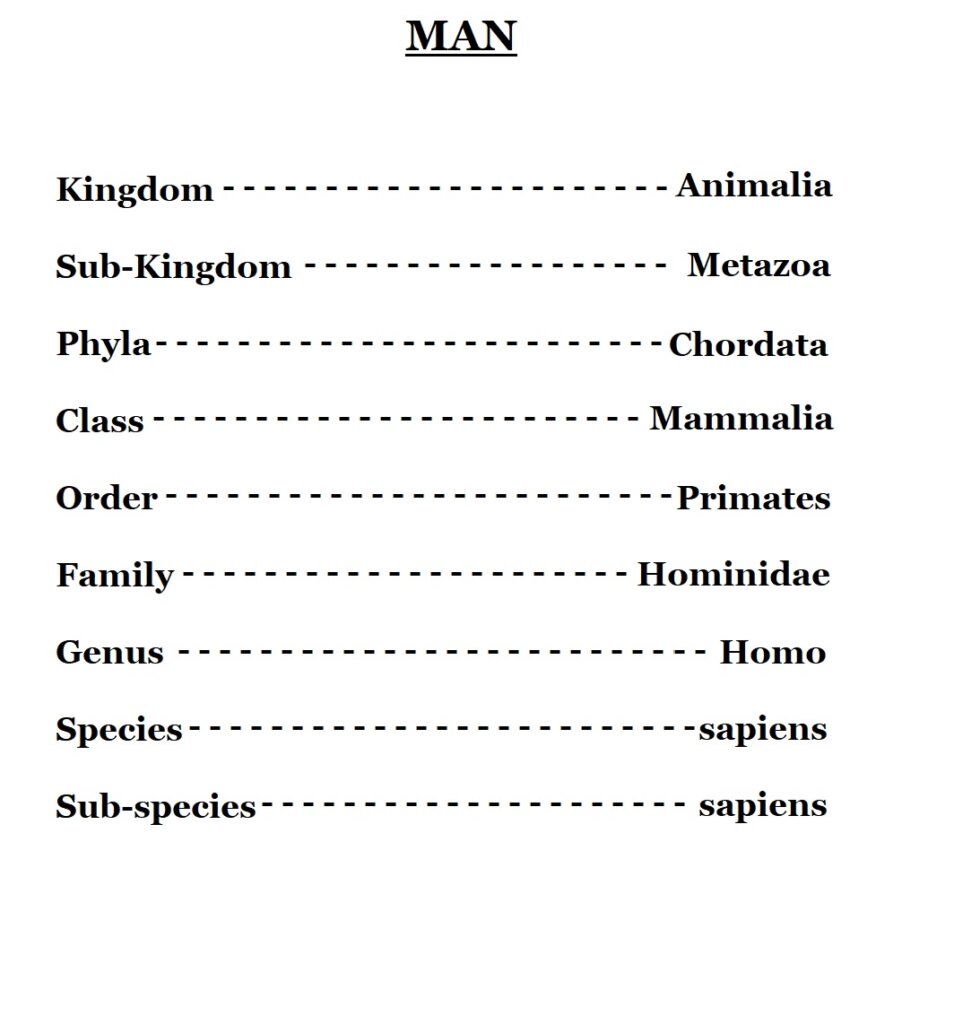
The argument of classification is really not an argument at all, at least not for evolution. In fact, if evolution were true you would have such a slow blending of life forms that it would be impossible to decide on any dividing points in which to classify because the changes would be so small as to leave no natural places for division or classification. The face that classification can and does take place demonstrates creation and not evolution.
But consider those strange exceptions to natural classification. Although they are small in number, they are significant.
Discussion will be limited to that strange creature, the platypus. No one, even the erudite evolutionist, knows from where the platypus came. He has poisonous spurs on his legs similar to the fangs of a snake. Did he descend from the snake? He has webbed feet like a duck. Did he descend from a duck? He is heavily furred and the female nurses its young. Is it descended from some mammal? It has cheek pouches. Did it descend from the gerbil or the hamster? It lays eggs. Did it descend from a bird? It has a duck bill. Could it have come from a duck billed dinosaur? The truth is, the platypus just does not fit anywhere comfortably and its evolutionary history is totally veiled in antiquity.
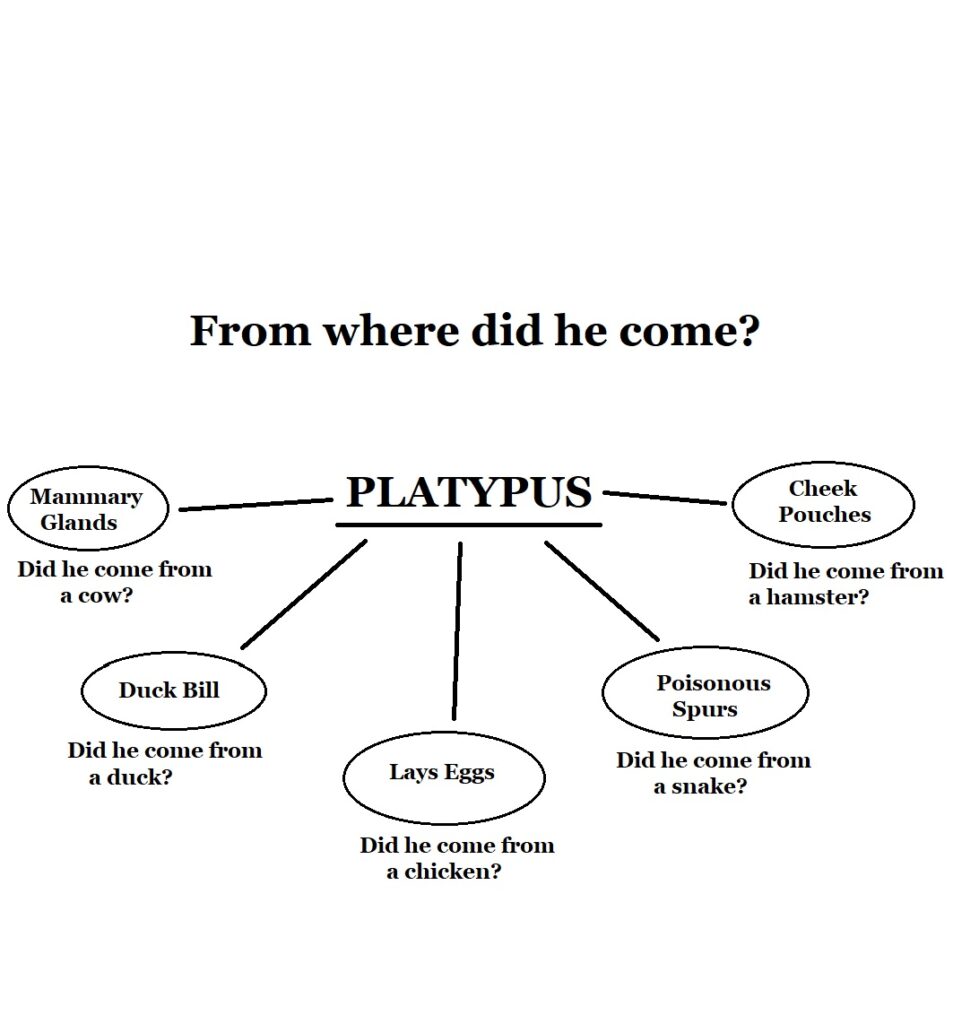
It is interesting to note that in taxonomy the classification of the platypus order wise is Monotremata and is shared with only one other creature, the spiny anteater. This is the way the evolutionists handle this massive problem. They just give the poor fellow a classification of his very own!
It should be seen, then, that taxonomy as a proof of evolution is useless. The arbitrary proof of evolution is useless. The arbitrary groupings and the exceptions which will not fit the groupings demonstrate that taxonomy does not support evolution.
F. Comparative Embryology
Comparative studies have been one of the areas of argument in defense of evolutionary theory that has grown as the area of scientific knowledge has increased. Comparative embryology, comparative anatomy, comparative physiology, and now genetics and DNA studies, have all been cited to demonstrate that all life is related and that this total field of relationship demonstrates conclusively that all life is related through the process of evolution.
There are a number of things that need to be considered. It is just as reasonable to conclude that all creation is related through a single Creator using similar patterns to create from as it is to conclude that everything is a matter of random evolutionary processes. One would not conclude that every piece of wooden furniture came from the same tree or even the same type of tree even though they were similar in structure.
Such extrapolations are not only absurd, but are totally unscientific. But this is precisely the type of unwarranted leaps made by the evolutionists in the area of comparative studies.
It should be observed that there are a lot of non-similarities which exist and contradictory evidence to these comparative arguments for evolution which are not presented. If comparative studies are legitimate in defense of evolutionary theory, why is it that so much crucial evidence is suppressed? In point of fact, why does such a monumental collection of contradictory evidence even exist?
When this author was a young man, he used to enjoy lying on his back in the field, a straw in his teeth, watching the cloud formations as they drifted lazily by, changing shapes and directions at the whim of the currents of air on which they rode. It was not hard to imagine the head of a dog, the body of a fish, or even an army of horsemen riding to battle across the sky. Of course, these were things seen in shadows, not in reality.
This same process is much the way the evolutionary scientist functions in relation to comparative studies and sometimes even the fossil record. He sees what he wants to see.
These comparative studies will help to demonstrate that these scientists are guilty of wishful thinking, over active imaginations, and have no real support for their claims of proof in the area of comparisons.
This section will start with an examination of comparative embryology. It was pointed out in an earlier section of this paper that there are really two arguments in this area presented by the evolutionist. They are (1) the similarity between embryos of different animals and (2) the doctrine of ontogeny recapitulation phylogeny. These two concepts, although held by some before his time, were actually impressed upon the scientific community by a man named Ernst Haeckel.
It is important to know that Charles Darwin stated that these proofs of evolution were second to none. It is important to know this, because after this statement was made by Darwin it was found out that Haeckel falsified the evidence that he used to support this “proof” he presented. Consider the following.
“To support his theory, however, Haeckel, whose knowledge of embryology was self taught, faked some of his evidence. He not only altered his illustrations of embryos but also printed the same plate of an embryo three times, and labeled one a human, the second a dog and the third a rabbit ‘to show their similarity’.”24
“(he even) went so far as to alter pictures of embryos drawn by someone else. A professor Arnold Bass charged that Haeckel had made changes in pictures of embryos which he had drawn. Haeckel’s reply to these charges was that if he is to be accused of falsifying drawings, many other prominent scientists should be accused of the same thing. . . “25
“When the convergences of embryos was not entirely satisfactory, Haeckel altered the illustrations of them to fit his theory. The alterations were slight but significant. . . The biogenetic law as a proof of evolution is valuless.”26
This being the case, the fact that these evolution arguments based on comparative embryology were falsified, one would think that they were no longer presented as fact today. But such is not the case. Consider the following.
“A study of the embryologic development of a bird’s or mammal’s heart shows that the various stages through which it develops succeed each other in the same general way from the two-chambered to the four-chambered condition, as shown when comparisons are made among the lower vertebrates, such as fishes, up to the amphibian, reptiles, and birds, to mammals.”27
Not only is this quotation, taken from a currently used biology book, based on a false concept that has long been rejected by credible scientists, it is even inaccurate as to its physiological statements. Consider the following.
“If the human embryo recapitulates its assumed evolutionary ancestry, the human heart should begin with one chamber and then develop successively into two, then three, and finally four chambers. Instead the human heart begins as a two-chambered organ which fuses to a single chamber which then develops directly into four chambers. In other words, the sequence is 2-1-4, not 1-2-3-4 as required by the theory.28
This collection of information is certainly enough to totally discredit the arguments for evolution based on embryology. But let us consider just a few more quotations before we leave this area of study.
“ . . . the biogenetic law has become so deeply rooted in biological thought that it cannot be weeded out in spite of its having been demonstrated to be wrong by numerous subsequent scholars.”29
“It has been subjected to careful scrutiny and has been found wanting.”30
“But the real weakness of this evidence is the fact that evolutionists have been guilty of selecting what seems to suit their theory, while at the same time neglecting the inconsistencies. For example, it has long been claimed that blood vessels evolved before the heart. However, in the human embryo the heart develops before the blood vessels. Likewise, according to evolutionists teeth evolved before the tongue. But in the embryo this is reversed.”31
“The type of analogical thinking that leads to theories that development is based on recapitulation of ancestral stages or the like no longer seems at all convincing or even very interesting to biologists.”32
“It was expected that the embryo would recapitulate the features of its ancestors from the lowest to the highest forms in the animal kingdom. Now that the appearances of the embryo at all stages are known, the general feeling is one of disappointment; the human embryo at no stage is anthropoid in its appearance.”33
Those that have been taught this theory often rebel at this information and make the argument that the human embryo has gill slits which show our fish ancestry. Let us continue to read the scholars on this point.
“But these structures in man are not slits or clefts. They are merely depressions between the corresponding arches which support the blood vessels necessary to support the forepart of the body. Their correct description is that of visceral furrows or grooves.”34
“One of the more popular ideas expressed by those who believe in embryological recapitulation is the idea that the human embryo (as well as the embryos of all mammals, reptiles, and birds) has “gill slits” during early stages of its development. The human embryo does have a series of bars and grooves in the neck region, called pharyngeal pouches, which superficially resemble a series of bars and grooves in the neck region of the fish which do develop into gills. In the human, however (and other mammals, birds, and reptiles), the pharyngeal pouches do not open into the throat (they thus cannot be “slits”), and they do not develop into gills or respiratory tissue (and so they cannot be “gills”). If they are neither gills nor slits, how then can they be called “gill slits”?”35
I would like to close this exposition of the embryo arguments for evolution with a quotation from R. L. Wysong. He writes,
“If we use the argument for embryology then let’s use it consistently. Why does the “law: not apply at all to the embryology of plants? If the horse has come from a four-toed ancestor, where is the four-toed embryological stage? If the whale has come from a four-legged land animal, where is its four-legged embryological stage? Birds are supposedly sprung from reptiles but at no time in bird embryology are there socketed teeth. If every stage in embryology represents an ancestor, then we humans must have had an ancestor with an umbilical cord and placenta attached. Insects pass through a pupal stage and, therefore, one of its ancestors must have been a dormant pupa. Maggots will more or less dissolve when developing into a fly. Therefore, one of the fly’s ancestors was a dissolved maggot. Chickens have an embryological stage where a huge yolk-sac is attached to their abdomen, therefore, a chicken ancestor would likewise have had a yolk-sac attached that is larger even than the chicken itself.”36
As has been said before in many writings on many subjects, what proves too much proves nothing. Embryology as a proof of evolution is totally falsified.
G. Comparative Anatomy
Having dealt with the comparative embryology arguments extensively, it will be the approach in this paper to deal only briefly with this “proof” since it is so similar.
It must be remembered similarities might be used to suggest evolution but they could never prove it. This series of “comparison” arguments is merely speculation, they are not proof in any real sense. The creationist believes that God created and that creation would be with the purpose of making different life forms to inhabit the same planet, breathe the same air, eat the same food, and experience much similarity in their individual quests for survival. It is only reasonable to believe that God would often use similarity of design in His creation.
At this point both the creationist and the evolutionist can claim similarities in their array of weaponry in the creation/evolution controversy. Both can produce logical arguments for their positions but neither can demand from the area of similarities that they are right and the other is wrong.
It will be seen, however, that the evidence in the area of comparative anatomy suggests, if not demands, that the creation model is the right one in which to interpret this data.
There are three areas this paper will now discuss which suggests that evolutionist’s position is falsified by comparative studies. They are (1) the manner in which the evolutionist forces alleged similarities, (2) the way the evolutionist overlooks the similarities that will hurt his cause, and (3) the way the evolutionist overlooks the dissimilarities found in these comparisons.
In relation to the forced interpretations made on biological units to prove the evolutionist’s suppositions concerning comparative evidences for evolution, let us consider the following quotation.
“A detailed comparative study of the anatomy of apparently different types of animals reveals a multitude of similarities that really overbalance the more dissimilarities. For instance, the differences exhibited by the five classes of vertebrates are relatively slight when compared with the many fundamental resemblances that thy all possess. The forelimbs of the frog, bird, cat, horse, and man, for example, are constructed of the same general structural plan and arise embryologically. They are thus homologous structures, and such differences or variations as exist are principally the result of the absence of some minor part or the transformation of a certain part, depending on the specific use to which that part has been put.”37
In all sincerity, a fair and complete review of this absurd statement (in a biology text, no less!) could be a paper in itself. But briefly, let us notice several interesting facts. Forgetting for the moment that this evolutionist text used the term “constructed” (one might ask who did the constructing) in relation to structure and forgetting that this text also relied on embryology which has been rejected for over half a century by qualified embryologists, one should ask himself the following question. “Can I legitimately see an obvious similarity between the front leg of a frog, the wing of a bird, the leg of a cat, the hoof of a horse, and the hand of a man?” Having asked such a question, one can readily see that the evolutionist is indeed guilty of forcing similarities rather than finding them.
What about the similarities (and there are thousands of them) which the evolutionist overlooks? Since the platypus, the duck, and some dinosaurs all have or had duckbills, are they all closely related? The evolutionist would faint at such a suggestion. What about the bat, the bird, the flying reptiles, and the winged insects? They all possess wings and have the ability to fly. Are they closely related one to the other? The whale more closely resembles the fish than the mammal but the evolutionist rejects this apparent similarity, saying the whale evolved from a land animal. This wholesale rejection of similarities that do not fit one’s theory demonstrates the invalidity of this argument on behalf of evolution and brings the evolutionist that uses such an argument into suspect.
The same is true of the dissimilarities. The dissimilarities between the many mammals is enough in itself to overthrow the evolutionist. Consider the differences again in the platypus, the elephant, the whale, and mankind. The dissimilarities are overwhelming when one even begins to try to look for similarities.
Let us leap ahead and consider a physiological argument here. One great example in the area of dissimilarities is when the blood of a newborn is incompatible with that of its mother. Does this mean that the donor who provides new blood for the infant is more closely related to that infant than its own mother? Oh, consistency, thou art a jewel!
H. Comparative Physiology
This is but another in the many comparison arguments fabricated by the evolutionists to obscure the issues. Consider this one brief quotation.
“Since functions and structures are interdependent, one would expect to find fundamental physiologic similarities in organisms with structural similarities. The following examples illustrate this: (1) The blood of closely related organisms is more nearly alike chemically and physiologically than the blood of the more distantly related types.”38
Forgetting for the moment that this extrapolation has serious contradictions to it in the animal kingdom, consider this. The root nodules of leguminous plants and the crustacean, Daphnia, contain hemoglobin. This is the blood pigment that is found in man. That would imply, according to the theory of comparative physiology, that leguminous plants are more closely related to man than to other plant life forms and that Daphnia is more closely related to man than to other lower animals or even other crustaceans. Remember, this is a comparison based on the blood chemistry of man, a crustacean, and plant roots! Read again the quotation above! The blood chemistry argument from the text quoted demands a close relationship between these totally different life forms! Enough said. Comparative arguments in all areas speak toward creation and not evolution.
I. Paleontology
Paleontology is the study of the geologic record of earth’s history with particular emphasis placed on the fossils found within that geologic record. The evolutionary hypothesis, having determined the order in which certain fossils ought to be found in the fossil record, has chosen what are called “index fossils” to aid in the determination of the age of certain strata (layers of ground laid down one on top of the other, etc). Whenever these fossils are located, it is then presumed by the evolutionist that the age of that strata in which it is found fits their evolutionary time frame. This section will simply list a few of the many things necessary in order for the fossil record to support evolution is sustained or rejected by the facts.
The following list is a collection of just a few things one would necessarily find in the fossil record if evolution were true.
- Evidence that life arose in a very simple form from a non-living source.
2. Evidence that life became more and more complicated and that over the millions of evolutionary years claimed, what now exists came from that one act of spontaneous generation.
3. There should be available millions of transitional forms in the fossil record with which one could document this process.
These three combinations are enough to totally discredit the evolutionary hypothesis as will be seen as this study continues. It has already been seen that spontaneous generation has never occurred. It has never been witnessed. It cannot be done in the laboratory. Even the few minor steps towards this that have been accomplished in the laboratory have been under the strictest set of controls set up by the scientist. This is hardly a fair method of testing spontaneous UNGUIDED generation!
The first issue to be reviewed will be that of the origin of simple life forms. Until recently, the oldest layer of rock known to contain fossils was the Cambrian. In recent times there are those in Australia and perhaps other places that believe they have found life forms in the pre-Cambrian layer. Even so, within the Cambrian layer one finds the simplest life forms found in fossil form. If evolution is true, these simple life forms (if there is such a thing as simple life forms!) should be all that is contained in this particular layer. Or, at the very least, there should be a gradual ascent to other simple life forms but this ascent should not go very far. But the truth is that in the Cambrian layer all the major phyla are represented, even the soft bodied ones and the fishes! Evolution cannot explain where theses came from because they appear suddenly in the fossil record, as well as early and FULLY FORMED! Consider the following.
“In spite of these examples, it remains true, as every paleontologist knows, that most new species, genera and families, and that nearly all categories above the level of families, appear in the record suddenly and are not led up to by known, gradual, completely continuous transitional sequences.”39
“There is no need to apologize any longer for the poverty of the fossil record. In some ways it was become almost unmanageably rich, and discovery is outpacing integration . . . The fossil record nevertheless continues to be composed mainly of gaps.”40
“The introduction of a variety of organisms in the early Cambrian, including such complex forms of the arthropods as the trilobites, is surprising . . . The introduction of abundant organisms in the record would not be so surprising if they were simple. Why should such complex organic forms be in rock about six hundred million years old and be absent or unrecognized in the records of the preceding two billion years.”41
“One of the major unsolved problems of geology and evolution is the occurrence of diversified multi-cellular marine invertebrates in lower Cambrian rocks and their absence in rocks of greater age. These early Cambrian fossils included Porifera, coelenterates, brachiopods, Mollusca, Schinoids, and arthropods. Their high degree of organization clearly indicates that a long period of evolution preceded their appearance in the record. However, when we turn to examine the pre-Cambrian rocks for the forerunners of these early Cambrian fossils, they are nowhere to be found.”42
It is seen from these quotations that life not only arose suddenly in the fossil record, but the evolutionists cannot understand this because of their hypothesis. One quotation stated that these finds “clearly indicated a long line of preceding evolution.” But, as that author pointed out, there are no fossils to substantiate this. What then “clearly indicated” that this evolutionary history had happened? The only answer is the ASSUMPTION that it had happened!
If the beginning of the fossil record in the early Cambrian does not support evolutionary theory, what about the progression of the fossil record? Is, for instance, the fossil record in a true ascending order as the evolutionist would have us believe? Consider the following.
“Numerously, and over immense areas, these “upside-down” conditions for modern geology exist. In one section of the earth, comprising part of Montana, Alberta, and British Columbia, an ‘upside-down’ condition covers 7000 square miles.”43
These upside down conditions which are referred to are the areas on which the fossil record is not in an ascending order. The evolutionist will go to any length to explain this phenomena. He will argue that the earth shifted and one layer of the earth’s surface climbed onto the one beside it and then years of weathering eroded the top layer leaving the fossils in the wrong order. Shifted? On top of another layer beside it? Eroded over million of years? 7000 SQUARE MILES? There is absolutely no evidence, apart from wishful thinking, to support such a hypothesis. Man has never witnessed such a massive shift. There are no shift lines between the two layers where the one supposedly slid on top of the other. There is no sign of such massive erosion. It is all purely speculation and imagination!
Let us return for a minute to something already referred to, index fossils. These fossils are used to identify the time their particular layer of sedimentary rock was laid down. Evolutionary dogma, by the way, has previously been used to date the fossil. This is a classic example of circular reasoning. It comes down to dating the rock by the fossil and the fossil by the rock. Talk about having your cake and eating it too! But even then this is no help for the evolutionist. If one were to travel to the Grand Canyon and apply the index fossil approach to what he found, he would find that (1) many old layers are on top of young ones, (2) some are intermingled between old, young, and intermediate, and (3) many layers are not even present at all! Evolution just cannot explain logically this wealth of data.
There is one other point to be made on index fossils at this time. Many of the fossils found of “extinct” animals are not extinct at all. The tuatara, a form of reptile which evolutionists have claimed was extinct for the last 135 million years, has been recently found alive and well in New Zealand.44 Other “extinct” creatures have also been found alive. If any of these forms have been used as index fossils, what does that do to the dating of the fossil record? It absolutely destroys its credibility!
Let us look finally at the fossils themselves. Is there a gradual ascending in the record of fossils? Are there thousands of intermediate forms documenting evolution? Consider the following.
“All paleontologists know that the fossil record contains precious little in the way of intermediate forms; transitions between major groups are characteristically abrupt.”45
“Most new species, genera, and families, and nearly all categories above the level of families appear in the records suddenly, and are not led up to by known, gradual, completely transitional sequences.” 46
These quotations could be multiplied by countless hundreds of times. There are just NO transitional forms!
An interesting observation from the following quotations will drive home the fact that there are no transitional forms. Consider the following quotations as a whole.
“ . . . we do not know the origin of the echinoderms, of the mollusks, of the coelenterates, nor of one group of protozoa from another.”47
“ . . . the breach between the vertebrate and invertebrate, worm and coelenterate, coelenterate and protozoan . . . is so wide that we cannot see across the intervening gap at all.”48
“How many-celled animals originated and whether this step occurred one or more times and in one or more ways remain difficult and ever-debated questions that are . . . in the last analysis, quite unanswerable.”49
“The fossil record does not give any information on the origin of insects.”50
“Fossil remains, however, give no information on the origin of the vertebrates.”51
“To our knowledge, no ‘link’ connected this new beast to any previous form of life. The fish just appeared.”52
“There is no missing link (that connects) mammals and reptiles.”53
“Fossils, unfortunately, reveal very little about the creatures which we consider the first mammals.”54
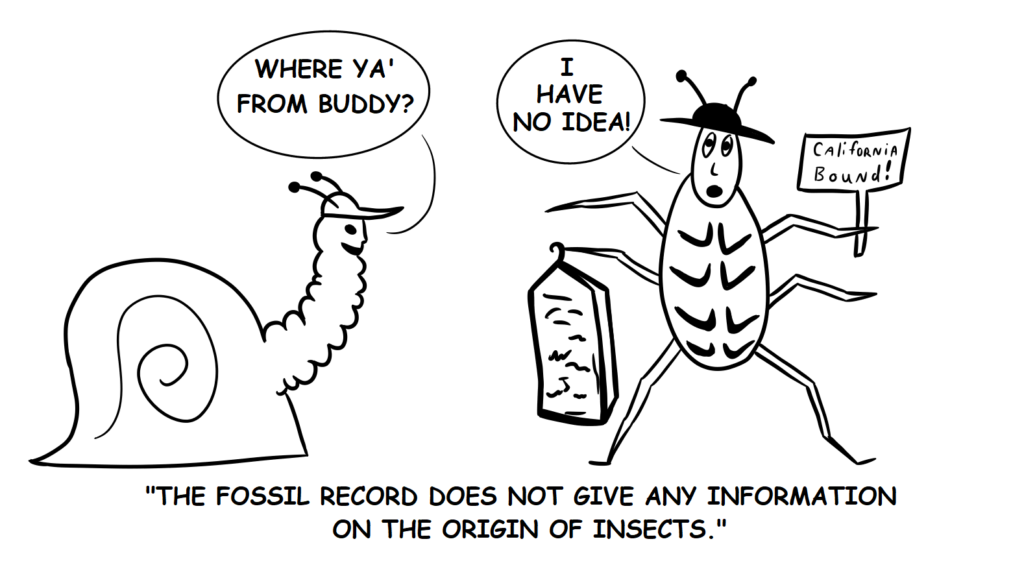
“There is no scientific evidence to prove that birds descended from reptiles.”55
“Unfortunately, the fossil record which would enable us to trace the emergence of the apes is still hopelessly incomplete.”56
“Modern apes, for instance, seem to have sprung out of nowhere. They have no yesterday, no fossil record.”57
“No fossil or other physical evidence directly connects man to ape.”58
“The human family does not consist of a solitary line of descent leading from an apelike form to our species.”59
This list of quotations offers ample proof that there are NO missing links documented anywhere! They just do not exist!
Two questions are posed by the evolutionist at this point. What about the evolution of the horse and what about Archaeopteryx? Let us discuss these briefly.
The so-called evolution of the horse is one of great imagination. Fossils are located throughout the world and placed in the horse’s ancestry without any proven link except some semblance of similarity (which has already been dealt with thoroughly). The evolutionists assume that this collection of fossils is of the same animal, they never prove that. It should also be recognized that (1) similar skeletons of the horse kind, large to small, are available from animals living even today, and (2) all of the skeletons, if they are horse skeletons, never demonstrate anything which could truly be pointed to as an evolutionary change. There are no ‘missing links’, no transitional forms from non-horse to horse.
It might be of interest that some of these fossils, Eohippus, supposedly the earliest horse, and said by experts to be long extinct and known to us only through fossils, may be in fact alive and well and not a horse at all – a shy, fox-sized animal called a daman that darts about in the African bush.”60
Concerning Archaeopteryx, this creature is merely a bird and not a missing link. Consider this quotation.
“At one time evolutionists believed that Archaeopteryx, meaning “ancient wing” or ‘ancient bird’ was a link between reptile and bird. But now, many do not. Its fossilized remains reveal perfectly formed feathers on aerodynamically designed wings capable of flight. Its wing and leg bones were thin and hollow. Its supposed reptilian features are found in birds today. And it does not predate birds, because fossils of other birds have been found in rocks of the same period as Archaeoptryx.”61
To the open-minded, the use of fossils to defend evolution against creation is totally unjustified. The fossils fit exactly what one would expect if creation were true. But they cannot even be made to fit rationally the model of evolution. Let us close this section with this quotation.
“ . . . no real evolutionist, whether gradualist or punctuationist, uses the fossil record as evidence in favor of the theory of evolution as opposed to special creation.”62
J. Time
The evolutionist relies heavily on the concept of vast amounts of time at his disposal. The “given enough time” cry has become almost for the atheist what John 3:16 is for the Christian. It is the center of his religion, that of secular humanism based on evolutionary concepts.
In the introductory quotation in the previous chapter concerning this argument it was pointed out that the evolutionist argues that given enough time, anything can and will happen. It would do well to notice the response of R. L. Wysong to this ludicrous concept when he states,
“Now the creationist steps in and says: ‘Just a minute, not everything is possible. Even given infinitely long spans of time, will time change rocks to gold, incandescent lights to stars, concrete to asphalt, fans to helicopters or phonograph records into books? Clearly, the line must be drawn somewhere.”63
It might be added here that the creationist draws the line at life rising from non-life, this being at least absurd as the examples given by Wysong.
Let us briefly look at the concept that given enough time, time will solve the problems of evolution. First it must be realized that time does nothing, at least not for the evolutionist. All time accomplishes is to expose all that exists to the degenerative processes involved in nature based on thermodynamics. Consider what time does do. Time turns young people old, peels the paint off your house, rusts your fence, rots the fence posts, runs down the battery in your automobile, and so on. Time is the enemy of the evolutionist, not his friend.
But forgetting briefly (I suppose one could forget for 4.5 billion years, it would not matter) that time is not a creative force, consider this. Even allowing the evolutionist creative time and the 4.5 billion years he claims, he still would not have the ability or the time to perform his miracles. Remember that the evolutionist keeps claiming more and more time (until recently he claimed only around two billion years) because he realizes that he NEEDS more and more time.
The evolutionist needs to accomplish the following in order to bring about mankind from an inorganic source (this will be only a partial listing of the many things needed). The evolutionist needs carbon, hydrogen, nitrogen, and oxygen. From this point on he will need these in just the right balances because too much of any of these will kill that first cell or that last man. He needs these four elements to form methane, water, ammonia, and hydrogen cyanide. From that he needs to get amino acids, sugars, fatty acids, purines, pyrimidines, etc., until finally there arrives on the scene a protein molecule.
At this time the problems for the evolutionist are just beginning. He needs not one protein molecule to form life, he needs hundreds! To complicate things, these protein molecules cannot be identical. There must be over a hundred separate and distinct protein molecules in order to form a living creature.
But there still are problems for the evolutionist. These 100 plus separate and distinct protein molecules must arise at the same time and at the same exact location (talk about luck!), slosh around until they bump into each other, hang on for dear life (or is it non-life?) until they form a cellular creature, survive in a hostile environment until they develop the ability to reproduce (which means first producing DNA and RNA), locate food (I suppose from the Walmart pet shop), and then start their climb up the ladder toward manhood.
Now let us ask the question, “How many steps would it take to accomplish this series of feats?” A thousand perhaps? Two thousand, maybe? No one could really say but one thing is for sure. This START would take many, many, many changes just to bring it about. In reality, if it could happen at all, this part of the process from matter to man would probably take thousands of changes in order to bring about this simple one-celled life form.
Now consider this. Evolutionists claim 4.5 billion years in their arsenal of time. But at the same time they admit that man has not basically changed for the last one million years (some even more than that). If man has not changed in one million years, it should be safe to assume by uniformitarian principles that a change upwards takes at least one million years to accomplish. If this is so, and it is certainly reasonable, there has been time for only about 3000 changes since the time evolutionists claim life first appeared on this planet. All this considered, the evolutionist needs vastly more time than he has claimed for himself. I predict that over the next twenty years evolutionary scientists will “discover” that the earth is much older than they previously thought. (Think about how much more time would be needed if left and right handed amino acids were considered in this study.)
The sad thing for the poor evolutionist is that he, in reality, does not even have his 4.5 billion years he claims.
First it should be noticed that his dating methods are invalid. The vast ages claimed for the earth by the evolutionists come from radioactive dating methods. The evolutionist claims that these are extremely accurate because, of the three major methods of dating used, they all generally agree. What he does not tell you is that these three methods of dating are set one by the other so that they must agree! He also does not tell you that there are several improvable assumptions made in relation to these tests (such as the concept that the daughter element is not present at the time of the formation of the rock to be dated) which, if any of these assumptions are wrong, then the results of the dating process will be totally useless.
The real truth is that the3se tests are totally unreliable. In 1968 an article appeared in the Journal of Geophysical Research discussing the potassium—argon dating method (this is the method most widely used today). In that article it discussed the dating of material which was known to be roughly 160 years old. The youngest age assigned to this material by this test was 160 million years! This dating method produced an age one million times the actual age of the material dated! The greatest age assigned by this test to this material was 2.96 billion years!64 This figure was over 12 million times too high (some margin of error!). One wonders what kind of reading material that was 4000 years old might have produced. If this test is so inaccurate and the others agree so well with it as the evolutionists claim, then these methods are totally useless.
The truth is that science speaks for a young earth. There are several valid arguments that can be made from the amount of hydrogen in the universe, to cosmic dust on the moon, to population statistics, and so on to defend the young earth concept. This article will present only one argument which this author believes to be conclusive. In 1979 researchers published an article which stated that the rate in which the sun is being consumed had been determined. Everyone knew the sun was burning up, now we know how fast. The facts provided in the article show that the sun is being consumed at five feet per hour.65 Dr. Bert Thompson, in a tract called The Young Earth, pointed out that using the uniformitarian approach and figuring backwards, that around 20 million years ago, according to these figures, the earth would have been inside the sun!66 So much for the vast time the evolutionist claims to have unless you believe that evolution took place INSIDE THE SUN! Please remember that the evolutionary process that was supposed to have gotten life to wher3 it is today was almost completed 20 million years ago according to the evolutionary time table. Time is certainly not the friend of the evolutionist!
K. Mutations
It was stated at the beginning of this refutation of the alleged evidences of evolution that three areas needed to be dealt with specifically. The first was spontaneous generation because there has to be a starting place, the second was the fossil record because this is the only area one can look for objective proof for or against evolution, and the third was mutations because evolution needs a mechanism in order to actually be true.
As has clearly been shown, there is absolutely no evidence or any logical process to intimate that spontaneous generation has ever occurred. This being the case, evolution has no place to start. It has also been shown that the fossil record not only does not support evolutionary theory but it actually stands against it because there is ABSOLUTELY no evidence of transitional forms in that record and the fossil record, in fact, shows life appearing fully formed and mature just as the creationist would predict.
Having demonstrated conclusively that evolution has (1) no starting place and (2) has no historical progression, it will now be the case of this paper to demonstrate that evolution has no mechanism. This section of the research will need not be lengthy since evolutionary theory has already fallen in this examination. But a few brief and explicit points on mutations will demonstrate the utter hopelessness of the evolutionist in supporting his position with this line of argument.
Mutations are changes that allegedly occur in the genetic code (DNA) that produce new species. It is alleged that these small changes can, over millions of creative evolutionary years, produce great progressions in the biological world. One must first ask, then, what is the nature of mutations. Consider the following.
“It must not be forgotten that mutation is the ultimate source of all genetic variation found in natural populations and the only new material available for natural selection to work on.”67
“It remains true to say that we know of no way other than random mutation by which new hereditary variation comes into being, nor any process other than natural selection by which the hereditary constitution of a population changes from one generation to the next.”68
These quotations are very revealing. They first reveal that all the evolutionist’s eggs are in the mutational basket. No mutations equals no progression and no new phyla. But another thing that needs to be noticed is that these mutations are of a “random” nature. That is, they are just whatever happens. There is no guiding force so it’s a question of taking whatever you get. This leaves the very concept of selection mentioned in these passages as a vague, if not contradictory concept. How could you have ‘selection’ and ‘random’ used together in such a way without having a blatant philosophical contradiction? Nature does not select. It merely takes randomly what mutations give it!
But the evolutionist has another weighty problem. If all that exists came from one cell, then there must have been millions and billions of mutations take place in order to accomplish such a feat. That means that mutations must be the rule rather than the exception in reproduction. True? False! Consider the words of this scientist.
“It is probably fair to estimate the frequency of a majority of mutations in higher organisms between one in ten thousand and one in a million per gene, per generation.”69
It becomes evident from this quotation that mutations are rare. With this in mind, it next needs to be learned how many of these rare mutations are favorable.
“It is entirely in line with the accidental nature of mutations that extensive tests have agreed in showing the vast majority of them detrimental to the organism in its job of surviving and reproducing, just as changes accidentally introduced into any artificial mechanism are predominantly harmful to its useful operation. . . good ones are so rare that we can consider them all bad.”70
This evolutionist tells us that there are no good mutations in the overall picture of things. With that in mind, let us review for a moment. First, mutations are the only mechanism the evolutionist has to use in defense of his theory of organic evolution. Secondly, mutations are bad when they do occur. Thirdly, mutations are bad when they do occur. This is the summary of the mechanism for evolution! Let us close this section with a quotation from Richard Goldschmidt where he states,
“It is true that nobody thus far has produced a new species or genus, etc., by macromutation. It is equally true that nobody has produced even a species by the selection of micromutations. In the best known organisms, like Drosophila, innumerable mutants are known. If we were able to combine a thousand or more of such mutants in a single individual, this still would have no resemblance whatsoever to any type known as a species in nature.”71
In fact, Drosophila, even after multiple mutations, when left alone, went back to its original form. The mutations were repaired and the species survived! Thus evolution has no starting place, no historical evidence, and no mechanism. Evolution is a fable created by modern man to entertain the pseudo-intellectuals of secular humanism and atheism.
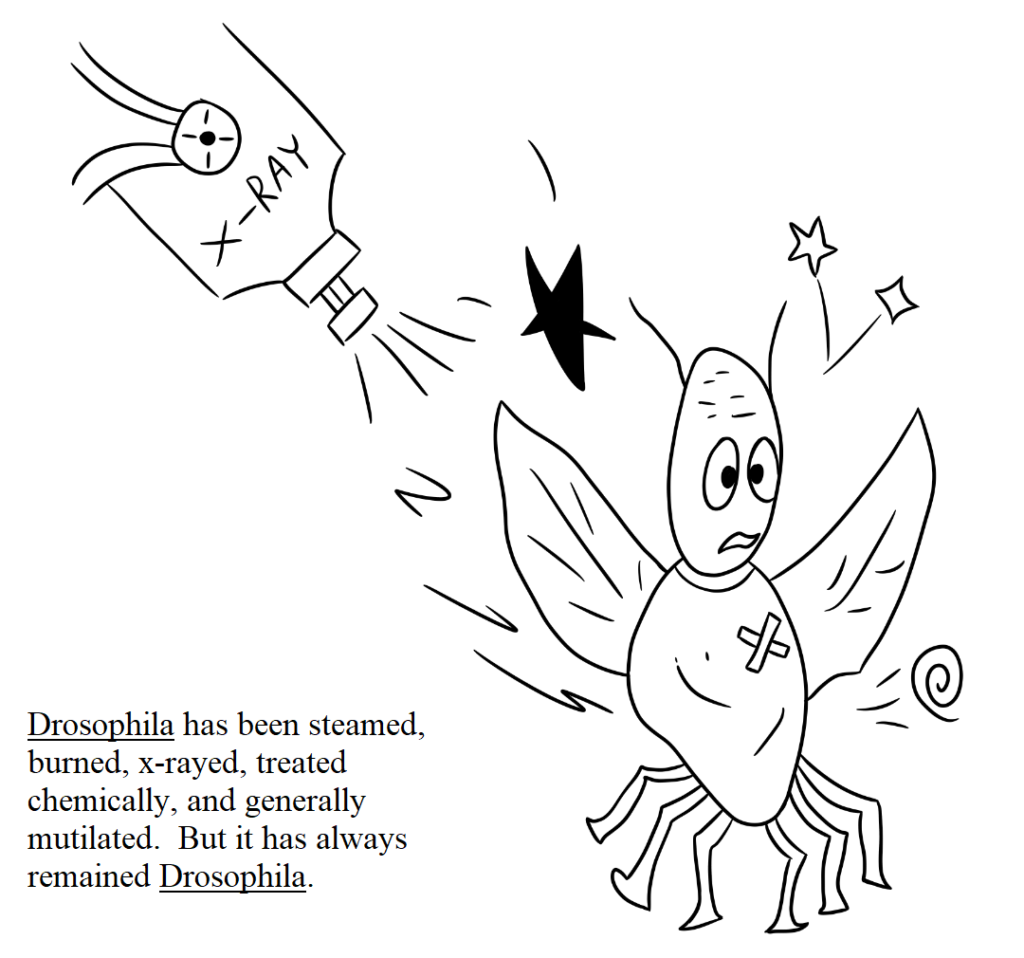
L. Dinosaurs
For some reason unknown to this author, many people seem to believe in evolution simply because massive dinosaurs once roamed this earth but are now extinct. They believe that since we no longer have them, they must have died out 70 million years ago as the evolutionist suggest.
This type of reasoning, the idea that their nonexistence on the earth today proves evolution, is in reality not reasoning at all. Even within the generation of this author, several species of animal have become extinct. There extinction does not prove that such extinction occurred 70 million years ago. In fact, it has been only a few years.
There are also several species still threatened with extinction today and are protected by law. If they should become extinct, it will certainly not prove evolution. If this is so, then why should one believe that dinosaur extinction is proof of evolution?
It should also be recognized that dinosaurs DID NOT become extinct 70 million years ago! It is a matter of record that man and dinosaurs lived on the earth together in times past. At Dinosaur Flats National Monument tracks of dinosaurs and wagon wheel tracks have been found in the same rock formations. The Supai Indians of the southwestern United States made drawings of dinosaurs on cave walls long before fossils were discovered. The only conclusion is that they saw the living thing. Trilobites (much older than dinosaurs according to evolutionary theory) have been found in the tracks of a human wearing a sandal. Human foot prints have been found in coal formations. This list of evidences could be extended for page after page. Man and dinosaurs lived together. This being so, not only can the dinosaur not be used to defend evolution, all of the evolutionary time charts fall into rubble because of this information.
But this is not all. The “extinct” coelacanth fish has been caught in several locations. The tuatara, “extinct” for 135 million years, has been found alive in New Zealand. These reports could also be multiplied many times. These “extinctions” just DO NOT SUPPORT EVOLUTION!
But this is still not all. Even the dinosaur fossils speak of creation. The dinosaurs are all fully formed and there are no transitional forms. The duck billed dinosaurs are not preceded by dinosaurs growing bills. The Brachiosaurus breathes from the top of his head rather than from the front. But there are no transitional forms showing his breathing mechanism moving from one location to another. Hundreds of other similar examples could be listed. Evolution does not fit the record of the dinosaurs.
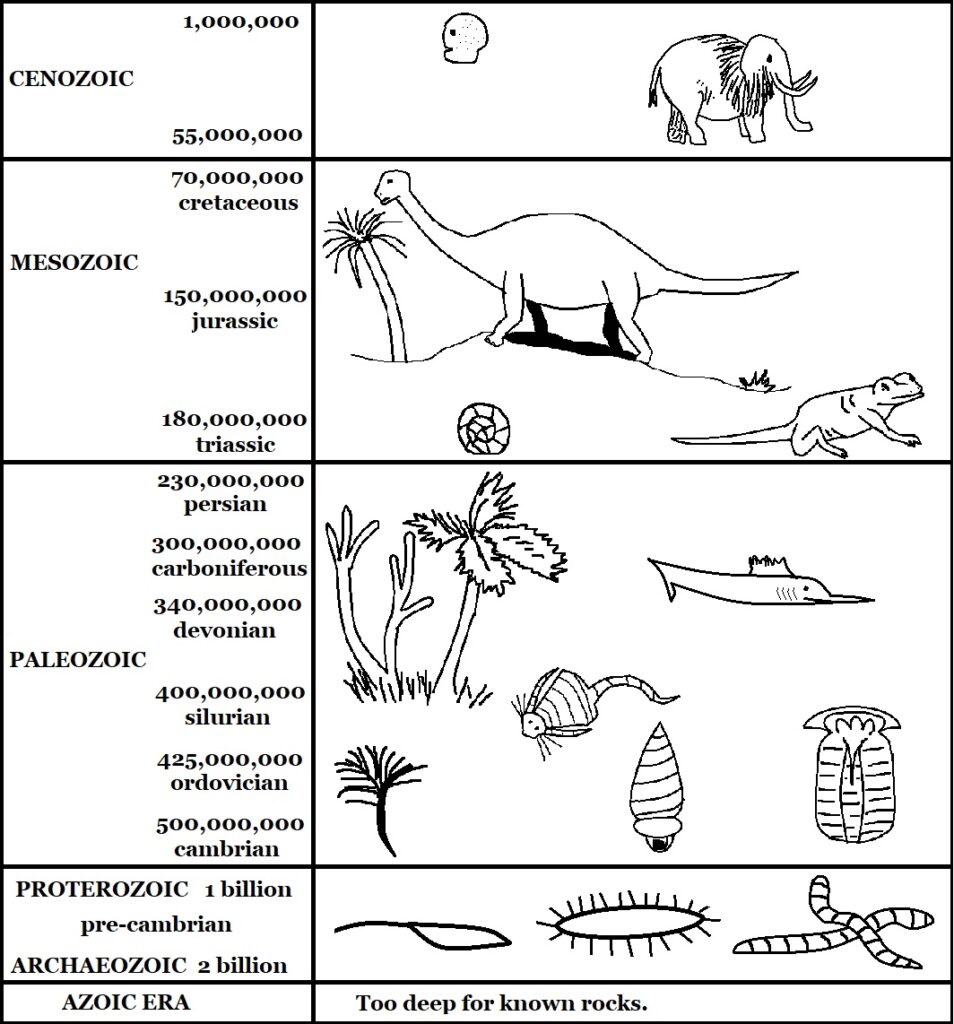
THE GEOLOGICAL CHART
The purpose of enclosing in this work a copy of the geological chart is to give some idea to the reader the alleged dating of the earth and its history as proposed by the evolutionary geologist. Many different charts vary widely as to their dates. But most, though not all, follow the same basic pattern of evolutionary descent.
One finds in the chart that there is a certain and specific order of fossils and time periods. But if one were to go to such places as the Grand Canyon he would discover that the geological layers represented are often in the wrong order, sometimes descending and sometimes totally mixed. He would also find that many of the layers were totally absent from his observations. In fact, no one place on earth has all the layers present, and seldom are the layers that are found in precisely the order predicted by the evolutionist. Actually, if all the layers were located at any one location and in their proper order, the deposit would be more than one hundred miles thick!
By the chart presented, it can be seen that in the Precambrian layer are found single celled animals and some bacteria. This proves that any species should be capable of fossilization if these small creatures survived the process. Where then are the two-celled, three-celled, four-celled, and more-celled fossils? They are conspicuously missing from the record!
In the Paleozoic period, when the Trilobite, Brachiopods, fishes, scorpions, etc. appear, they are all fully formed and never demonstrate an evolutionary history. The same is true in all periods including the one to which man belongs.
It should be remembered that many violations of this chart are scientifically known. Footprints, a hammer, a skull, etc. have been found in coal veins allegedly formed during the carboniferous period. Dinosaur tracks and man’s tracks have been found together. But dinosaurs allegedly died out 70,000,000 years before man arrived on this earth.
Many other problems for the evolutionary geologist exists such as 300,000,000 year old Trilobites in the footprints of a human wearing a sandal, all demonstrating that the geological chart produced to defend evolution is merely the product of an over active imagination.
IIII. COULD YOU PLEASE ANSWER ME THIS?
The refutation of the vast and contradictory theories of evolution begins to open the mind to a number of interesting questions. Since the evolutionists claim that evolution is indeed a fact of science then one must conclude that they have the answers to any questions one might pose. Lets spend a little time putting that possibility to the test.
QUESTION ONE: What is the scientific explanation for the origin of matter?
This seems to be a harmless question. After all, if we understand the full process of evolution we must also understand the full process of origins. Where did matter originate? Is matter eternal? If it is not eternal, from what did it come?
This question is one that the evolutionist cannot answer. The second law of thermodynamics says basically that everything in a closed system runs down. The universe is a closed system, that is, there is no outside source injecting energy into it. That being true, then if the universe was eternal, it should eons ago have reached the point where no energy was available. Since it has not reached this point, then it must have come into existence.
We know from experience in everyday life and from scientific efforts that nothing can never produce something. This being so, and matter not being eternal, it must have been produced by something. What is that something? The evolutionist has no real idea. He cannot even begin to offer anything vaguely scientific that can present an answer to this problem. But somewhere there must be an eternal something; let’s call it an uncaused cause. What is this uncaused cause? Is it matter? We know better than that because of the second law of thermodynamics. The only other existent of which this author is aware is mind. Either matter or mind MUST be eternal. But matter is not. Such being the case, mind must be eternal, and that mind the creationist calls GOD.
QUESTION TWO: What is the origin of the universe, the earth, and its universal order?
Even if one could rationalize into existence matte without creation, he would have only scratched the proverbial surface. He must still put together in an orderly fashion the universe consisting of countless millions of galaxies, they in turn consisting of countless millions of solar systems, suns, planets, moons, quasars, black holes, and so on.
The evolutionist does not appreciate or accept the argument based on order. He believes in random chance, in fact his entire scheme is based on that concept. He, therefore, often denies the order of things (People often deny what they cannot explain and do not want to accept). But the order of the universe is undeniable when fairly and impartially viewed. In fact, Thales, a Greek philosopher, predicted a solar eclipse hundreds of years before Christ. He was able to do this because of the orderly behavior of the earth in its relationship to the sun and the moon.
Our space program is based on the order of planets, moons, etc., and our ability to accurately chart their movements and relationships. We send ships to the locations where certain heavenly bodies will be and NOT to where they are presently. This is based on order.
We plant our crops based on the accurate nature of the seasons. Year after year we know approximately when the seasons will begin and end. Order permeates the universe, solar system, and the planet on which we live.
The planet itself is a demonstration of order. It has design and function. If matter came into existence without the Hand of God, then how did it become more than just a nebula of dust and gas? How did it gain structure into definable and distinct bodies? What designed its form and function? The evolutionist has no answer. But the creationist knows it was the mind of God that set the order and brought about the distinct planets and other heavenly bodies.
Perhaps I am just a little unfair at this point. The evolutionist does have an answer as to the origin of the universe and order. I hesitate to mention it because it is non-viable and absurd. He calls it the big bang theory. The idea is that something (no one really knows what) existed in a compressed nature (perhaps hydrogen) and billions of years ago this “something” exploded. From that explosion came all that exists today. Many evolutionary scientists believe that this “something” was smaller than a hen egg. From this “egg” came all that is. One might well refer to the previous question and ask where this “something” came from. But a more interesting question is why someone believes in such a theory to start with. All nebulous answers aside, it is because of a denial of creation. It takes far more faith to believe in this theory than to believe in a creator.
QUESTION THREE: What is the origin of life?
The evolutionist answers this question with the simplistic answer, spontaneous generation. We have seen already that such a theory is totally without foundation. But let us ask this, if spontaneous generation is true, what can the evolutionist offer as the mechanism of this thing called spontaneous generation? He has never produced life from non-life, he has never witnessed life arise from non-life, and in fact he could not even bring back a dead cat, much less produce a new one. Simply speaking, the evolutionist has no mechanism.
This issue of spontaneous generation opens up another area of thought that the evolutionist is not prepared to deal with in any real and meaningful manner. The question stimulated by spontaneous generation is that if such took place, why is it not still occurring? You will remember that earlier we reviewed a list by Dr. G. A. Kerkut of seven non-verifiable assumptions concerning the general theory of evolution. One of those assumptions was that spontaneous generation occurred only once. Not only is it not occurring now, it never occurred even the second time! One might ask why this position is necessary to the evolutionist.
A study of deoxyribonucleic acid (DNA) and ribonucleic acid (RNA) gives us the probable answer. These two nucleic acids are fascinatingly complicated and also intricately related one to the other. Simply put, DNA is the genetic material which determines the characteristics of the life form which it produces. RNA performs the functions of messenger and transfer in relation to DNA. That must have both and they must function in harmony for life to exist.
Again, these two acids are extremely complicated. For spontaneous generation to have occurred requires that both of these must be produced at the same time (in that alleged 4.5 billion years), at the same location, must be compatible, combine with each other, begin to function simultaneously and harmoniously, and survive in a hostile environment.
For either of these acids to occur spontaneously is absurd. For both to occur spontaneously in beyond even imagination, but for ALL this to happen is an absurdity of the highest order. Since EVERY living organism on the Earth has both DNA and RNA, either the evolutionist must state that spontaneous generation occurred only once and that all life is related or that spontaneous generation occurred twice or more and EVERY TIME it produced the DNA-RNA factor! Since this scenario is so insane, even the evolutionist must admit it could not occur twice! If such spontaneous generation cannot happen twice, it is very reasonable to assume (especially in light of the fact that there is no supportive evidence for spontaneous generation) it could not occur even once.
QUESTION FOUR: What is the origin of Species?
Now you might think that this question has been answered. After all, did not Charles Darwin answer this question in his book of that title? In truth, Mr. Darwin answered little but asked much. The mechanism he offered was not valid and has been reworked, remodeled, and removed by various evolutionists. His answer just did not stand.
But Mr. Darwin asked much. He asked you to accept as viable an unproven and unreliable hypothesis. He asked you to accept as a world view that which would destroy faith in God and the Bible. He took but he gave not.
The origin of the species is evolution in a nut shell. Without origin of the species, there is no evolution. Now there are certainly changes that take place today by selective breeding and the like. But the changes demanded by evolution which would produce leaps across genetic boundaries simply do not occur. We do develop new sub-species of dogs, cattle, and other animals, but from a dog we do not get an elephant or a lemur, or even a what-cha-ma-call-it. These changes simply do not occur.
But if evolution did once occur, why is it, in this age of enlightenment, has it ceased to occur? If there is a mechanism that once made it work such as mutations (already disproven earlier) why does this mechanism no longer function? The simple truth is, of course, that evolution is a myth and not a reality. In simply truth, the evolutionist cannot give us origin information on the species or demonstrate such from any area of science.
QUESTION FIVE: Where did all the mates come from?
For evolution to be defendable, one amazing thing must have occurred. For each step in the evolutionary ladder there must have been TWO IDENTICAL MUTATIONS, one male and one female, they had to occur at the same time and location, both be fertile, both survive to maturity, breed, reproduce multiple offspring, both male and female, in order to continue as a species. This is so fantastic in light of what we know about mutations as to be beyond description. This is a conclusion totally unacceptable and yet absolutely necessary if evolution is to be accepted. Evolution simply cannot provide you with the mates needed to keep the species in existence.
Many hundreds of unanswerable questions await the evolutionist. But these will suffice to demonstrate that the evolutionist is not nearly so clever as he would have the creationist and the unsuspecting public to believe. Evolution simply cannot survive honest investigation.
Conclusion
A. The Falsification of Evolution
From arguments presented and refuted it can clearly be seen that evolution is simply a theory set forth by those who (1) have great resources of imagination, and (2) who do not wish to face the reality of a Creator. Evolution does not stand the test of examination from either a scientific or a philosophical perspective. Evolution is falsified!
B. The Case for Creation
The case for creation has been clearly established in the previous evidences set forth to refute the theory of organic evolution. There is no need here for any great listing of evidences in favor of creation. This paper will simply mention several laws of science and philosophy which demand a Creator.
The first law is that of biogenesis. This law states that life comes from preceding life and that of its own kind. The theory of evolution violates this law millions and millions of times. Creation does not violate it even one single time!
The second is a collection of laws concerning thermodynamics. The first law states that there is neither a gain nor a loss in the amount of energy/matter in the universe. The second states that the availability of the energy is becoming less and less (entropy). Only creation could account for the presence of both of these laws! If there was no creation, all energy should have long sense become unavailable.
The next law is that of probability. This law does not allow for the chance formation of proteins, cells, or progressive evolution. Creation, however, does no damage to this law whatsoever.
The law of cause and effect demands that there is a Creator. There must always be a cause equal to or greater than any effect. Only the uncaused cause called God could have brought the universe into being.
There are many other proofs of creation but these certainly should suffice to demonstrate creation to the honest, unbiased mind. Creation is the true and total reality!
FOOTNOTE PAGE
Introduction:
1. Lewis, C. S. Mere Christianity, Barbour and Company, Inc. Westwood, NJ 1952. p 184.
2. Swift, Jonathan. Gulliver’s Travels, Great Books of the Western World. Encyclopedia Britannica, Inc. 1952. V 36. p 167.
3. Locke, John. Concerning Human Understanding, Book III. Chapter VI. Section 23.
I. Is Evolution a “Fact” of Science?
1. Huxley, Julian. “At Random: A Television Preview.” IN: Evolution After Darwin. University of Chicago, Ill. 1960. p 41.
2. The New Orleans Times – Picayne. May 7, 1964.
3. Goldschmidt, Richard. IN: American Scientist. 40. 1952. 84
4. Savage, J. Evolution. Holt, Reinhart, Winston. New York, New York. 1965. Preface
5. Muller, H. J. Quoted in Forty Two Years on the Firing Line. J. D. Bales, Author. Lambert Book House. Shreveport, Louisiana. Undated. Pp 71-72.
6. Dobzhansky, Theodosius. IN: Evolution of Man. Oxford University. New Jersey. 1970 p 58.
7. Smith, Charles. Third Annual Report of the American Association for the Advancement of Atheism. 1928. p 15.
8. Huxley, Julian. “Evolution in Genetics.” IN: What is Science? Simon and Schuster. New York, New York. 1955. pg 278
9. Simpson, George Gaylord. “The World into which Darwin Led Us.” IN: Science. 185, 1974. 654.
10. Thompson, W. R. “Introduction” to The Origin of the Species. By Charles Darwin. E. P. Dutton. New York, New York. 1956
11. More, L. T. Quoted in Why I Believe in Creation. Evolution Protest Movement Pamphlet. Great Britain. 1968.
12. Keith, Arthur. Quoted in Why I Believe in Creation. Evolution Protest Movement Pamphlet. Great Britain. 1968
13. Kerkut, G. A. Implications of Evolution. Pergamon Press. New York, New York. 1960
14. Patterson, Colin. “Address at the American Museum of Natural History.” New York, November 5, 1981.
15. Hoyle, Fred. “The Big Bang in Astronomy.” IN: New Scientist. Vol. 92. November 19, 1981. p 526
16. Hoyle, Fred. “The Big Bang in Astronomy.” p 527
17. Lipson, H. S. “A Physicist Looks at Evolution.” IN: Physics Bulletin. May 1980.
18. Tahmisian, Theodore N. Quoted in: Fortify Your Faith in an Age of Doubt. Wayne Jackson, author. Stockton, California. 1974. p 37.
II. The Alleged Proofs of Evolution Explained
1. Kerkut, G. A. Implications of Evolution. pp 6,7.
2. Noland, George B. ed. General Biology. Ninth Edition. C. V. Mosby Company. Saint Louis, Missouri. 1975. p 500.
3. Darwin, Charles. in Origin of the Species in Chapter XIV “Mutual Affinities of Organic Beings” under the section Development and Embryology makes the argument of the importance of embryology arguments in the defense of evolutionary theory.
4. Darwin, Charles. The Descent of Man. Part I. Descent or Origin of Man. Chapter I. The Evidence of the Descent of Man From Some Lower Form.
5. Wald, George. “The Origin of Life.” IN: The Physics and Chemistry of Life. Simon and Schuster. New York, New York. 1955. p 12.
III. The Alleged Proofs of Evolution Refuted
1. Clark, W. LeGros. Discovery. January 1955. p 7.
2. In Text.
3. Wald, George. “The Origin of Life.” IN: Scientific American. August 1954. p 45.
4. Dewar, Douglas. “The Case Against Evolution.” IN: Witness Against Evolution. Christian Victory Publishing Company. Denver, Colorado. Undated. P 52.
5. Oparin, A. I. The Origin of Life. Dover Publications. 1953. pp 132,133.
6. Conklin, Edwin. Reader’s Digest. January 1963. p 92.
7. Hoyle, Fred. Nature. November 12, 1981. p 105.
8. Thompson, Bert. “The Scientific Evidences for Creation (part one).” Reason and Revelation. Apologetics Press, Inc. Montgomery, Alabama. 1984. p 14.
9. Huxley, Julian. Introduction to The Origin of Species. J. M. Dent. London, England. 1971.
10. Patterson, Colin. A radio interview with the B. B. C. March 4, 1982.
11. Vilee, C. A., Walker, W. F., and Smith, F. E. General Zoology. Saunders. Philidelphia, Pennsylvania. 1963. p 669.
12. Matthews, L. Introduction to The Origin of Species. J. M. Dent. London, England. 1971.
13. Noland, George. ed. General Biology. P 518.
14. Morris, Henry M. Scientific Creationism. Master Books. El Cajon, California. 1974. p 76.
15. Williams, Jon Gary. The Other Side of Evolution. Williams Brothers Publishers. LaVergne, Tennessee. 1970. p 31.
16. Clark, W. LeGros. Early Forerunners of Man. Balliere, Tindall, and Cox. London, England. 1934. p 205.
17. Strauss, William L. Quarterly Review of Biology. 1947. p 149.
18. Medical Times, Journal For The Family Physician. September 1966. p 263
19. Wysong, R. L. The Creation – Evolution Controversy. Inquiry Press. Midland, Michigan. 1976. p 397.
20. Evolution. I. C. C. Toronto, Ontario, Canada. Undated. p 24.
21. Williams, Jon Gary. The Other Side of Evolution. p 32.
22. “Evolution – A False Argument Answered.” IN: Christian Courier. September 1978. Volume XIV. No. 3.
23. Thompson, Bert. “The Alleged Proofs of Evolution.” Part Two of a Four Part Tape Series. Apologetics Press, Inc. Montgomery, Alabama. Undated.
24. Bowden, M. Ape-man, Fact or Fallacy. Sovereign Publications. 1977. p 128.
25. Davidheiser, Bolton. Evolution and Christian Faith. Presbyterian & Reformed. 1969. p 76.
26. Thompson, W. R. “Introduction” IN: The Origin of Species. by Charles Darwin.
27. Noland, George B. ed. General Biology. pp 513, 515.
28. Gish, Duane T. Evolution: The Challenge of the Fossil Record. Creation – Life Publishers. El Cajon, California. 1985. p 252.
29. Bock, Walter J. “Evolution by Orderly Law.” Science. Vol. 164. May 4, 1969. p 684.
30. Huettner, A. F. Comparative Embryology of the Vertebrates. Macmillan Company. New York, New York. 1941. p 1.
31. Williams, Jon Gary. The Other Side of Evolution. p 36.
32. Waddington, C. H. Principles of Biology. 1965. p 10.
33. Keith, Arthur. The Human Body. 1932. p 94.
34. Evolution. I. C. C. Toronto, Ontario, Canada. Undated. p 10.
35. Gish, Duane T. Evolution: The Challenge of the Fossil Record. Creation – Life Publishers. El Cajon, California. 1985. pp 251, 252.
36. Wysong, R. L. The Creation – Evolution Controversy. Inquiry Press. Midland, Michigan. 1976. pp 400, 401
37. Noland, George B. ed. General Biology. p 518
38. Noland, George B. ed. General Biology. p 518
39. Simpson, George Gaylord. The Major Features of Evolution. Columbia University Press. New York, New York. 1953. p 360.
40. George, T. N. “Fossils in the Evolutionary Perspective.” IN: Science Progress. Vol. 48. January 1960. pp 1,3.
41. Kay, Marshall and Colbert, Edwin. Stratigraphy and Life History. John Wiley & Sons. New York, New York. 1965. p 102.
42. Axelrod, Daniel. “Early Cambrian Marine Fauna.” IN: Science Vol. 128. 1958. p 7.
43. Nelson, Byron. The Deluge Story in Stone. p 143.
44. Overton, Basil. Evolution in the Light of Scripture, Science, and Sense. J. C. Choate Publications. Winona, Miss. 1981. pp 78,79.
45. Gould, Stephen J. “The Return of the Hopeful Monsters.” IN: Natural History. June-July 1977. p 24.
46. Simpson, George Gaylord. The Major Features of Evolution. Columbia University Press. New York, New York. 1953. p 360.
47. Thompson, D’Archy Wentworth. On Growth and Form. University Press. Cambridge. 1943. p 1093.
48. Thompson, D’Archy Wentworth. On Growth and Form. University Press. Cambridge. 1943. p 1093.
49. Science. February 23, 1973. p 789.
50. Encyclopedia Brittanica. “Macropaedia.” 1976. vol. 7. p 565.
51. Encyclopedia Brittanica. “Macropaedia.” 1976. vol. 7. p 567.
52. Marvels and Mysteries of our Animal World. The Reader’s Digest Association. 1964. p 25.
53. Carr, Archie. The Reptiles. 1963. p 41.
54. Carrington, Richard. The Mammals. 1963. p 37.
55. Thompson, D’Archy Wentworth. On Growth and Form. University Press. Cambridge. 1943. p 1093.
56. Eimerl, Sarel and DeVore, Irven. The Primates. 1965.
57. Watson, Lyall. “The Water People.” Science Digest. May 1982. p 90.
58. Gliedman, John. “Miracle Mutations.” Science Digest. May 1982. p 90
59. Stanley, Steven. The New Evolutionary Timetable. 1981. p 5.
60. Hitching, Francis. The Neck of the Giraffe. 1982. p 31.
61. Life – How Did it Get Here? By Evolution or By Creation? Watchtower Bible and Tract Society of New York, Inc. Brooklyn, New York. 1985. pp 79, 80.
62. Rilwy, Mark. IN: New Scientist. June 1981. p 831.
63. Wysong, R. L. The Creation – Evolution Controversy. Inquiry Press. Midland, Michigan. 1976. p 138.
64. Journal of Geophysical Research. 1968.
65. Lubkin, G. B. Physics Today. Vol. 32. 1979.
66. Thompson, Bert. The Young Earth. Apologetics Press. Montgomery, Alabama. Undated.
67. Mayr, Ernst. Populatoins, Species, and Evolution. Harvard University Press. Cambridge, Mass. 1970. p 102.
68. Waddington, C. H. The Nature of Life. Atheneum. New York, New York. 1962. p 98.
69. Ayala, Francisco. “Teleological Explanations in Evolutionary Biology.” Philosophy of Science. Vol. 37. March 1970. p 3.
70. Muller, H. J. “How Radiation Changes the Genetic Constitution.” IN: Bulletin of the Atomic Scientists. 11(1955):331; 11(1955):331; Time Magazine. November 11, 1946. p 96.
71. Goldschmidt, Richard. “Evolution as Viewed by One Geneticist.” American Scientist. Vol. 40. January 1952. p 84.
SUGGESTED READINGS
One of the most valuable aspects of a book can be its suggestions for further research or readings. I believe the following list contains some of the best works on the market concerning the issues surrounding evolution and creation. I have drawn extensively from these works and believe that they contain a more than adequate defense of the truth of creation.
The Genesis Flood. Whitcomb, John. and Morris, Henry. Baker Book House. Grand Rapids, Michigan. 1961.
Theistic Evolution. Thompson, Bert. Lambert Book House. Shreveport, Louisiana. 1977.
The Creation – Evolution Controversy. Wysong, R. L. Inquiry Press. Midland, Michigan. 1984.
After Its Kind. Nelson, Byron. Bethany House Publishers. Minneapolis, Minnisota. 1967.
Evolution or Creation? Overton, Basil. Gospel Advocate Company. Nashville, Tennessee. 1973.
Dinosaurs, Those Terrible Lizards. Gish, Duane. Master Book Publishers. El Cajon, California. 1977.
Evolution and the Scientific Method. Bales, James. Searcy, Arkansas. 1976.
Evolution: The Challenge of the Fossil Record. Gish, Duane. Creation-Life Publishers. El Cajon, California. 1985.
The History of Evolutionary Thought. Thompson, Bert. Star Bible and Tract Corp. Fort Worth, Texas. 1981.
Evolution: Possible or Impossible? Coppedge, James. Zondervan Publishing House. Grand Rapids, Michigan. 1980.
The Other Side of Evolution. Williams, Jon Gary. Williams Brothers Publishers. LaVergne, Tennessee. 1970.
Scientific Creationism. Morris, Henry. Master Books. El Cajon, California. 1974.
The Deluge Story in Stone. Nelson, Byron.
Evolution in the Light of Scripture, Science, and Sense. Overton, Basil. J. C. Choate Publications. Winona, Mississippi. 1981.
These books and many other good works (tapes, tracts, books, etc) may be obtained from Apologetics Press. Their address is as follows:
Apologetics Press
230 Landmark Drive
Montgomery, AL 36117-2752